The Defensive Genius of Walt Frazier: How ‘Clyde’ Changed NBA Defense Forever

When people think of Walt “Clyde” Frazier, the first images that often come to mind are of his smooth, stylish demeanor, his impeccable fashion sense, and the effortless grace with which he handled the basketball. Yet, behind the flash and the charisma lies a basketball mind so sharp, so strategically gifted, that he fundamentally redefined what it meant to play defense in the NBA. Frazier wasn’t just a flashy point guard or a clutch scorer; he was a defensive mastermind whose approach to guarding the league’s best players left a lasting imprint on the sport.
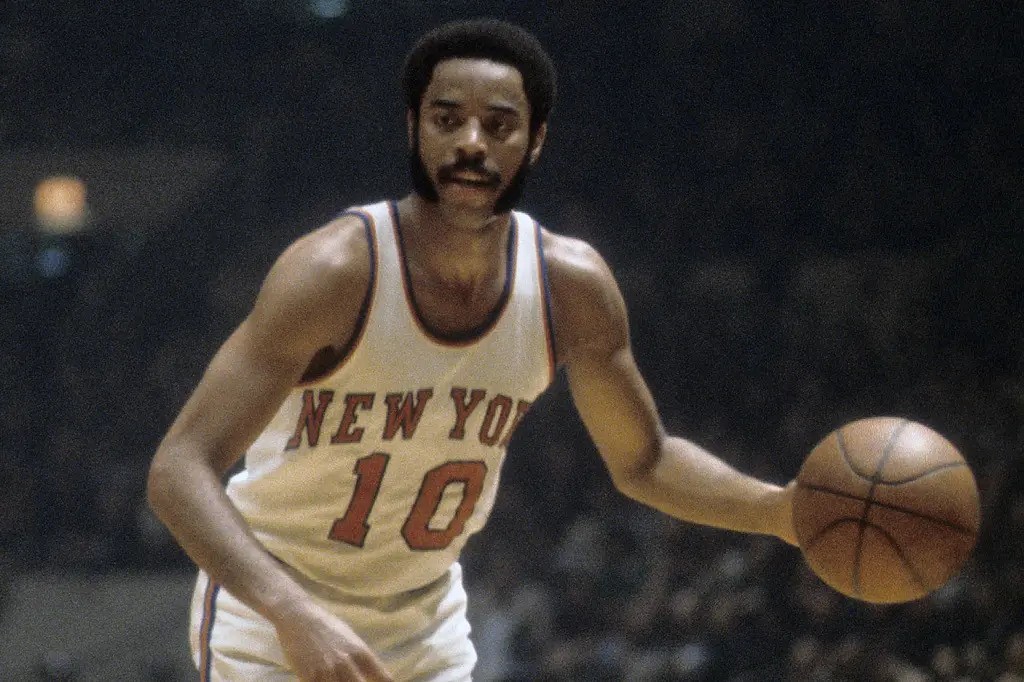
The Rise of Clyde: Entering the NBA
Walt Frazier was drafted by the New York Knicks as the fifth overall pick in the 1967 NBA Draft, entering a league that was experiencing both a surge in popularity and a stylistic shift. The NBA of the late 1960s was raw, physical, and dominated by bruising big men. Guards were often overlooked in the defensive hierarchy, but Frazier saw an opportunity. Standing 6-foot-4, with long arms, lightning-quick reflexes, and exceptional court awareness, he possessed the tools to change the narrative of what a defensive guard could be. From his very first season, Frazier demonstrated an uncanny ability to disrupt opponents, anticipate passes, and create turnovers.
It didn’t take long for the basketball world to notice that Frazier’s defense was not just about hustle or effort—it was about intelligence. His positioning, timing, and decision-making allowed him to neutralize players who were often considered physically superior. He became the kind of player who made other teams adjust their offensive strategies simply because he was on the floor.
Defensive IQ Beyond His Years
Walt Frazier’s defensive brilliance can be best understood through the lens of his basketball IQ. Unlike many players who rely solely on athleticism to make an impact on defense, Frazier relied on anticipation and awareness. He had an almost preternatural sense of where the ball would go, where a cutter would appear, and how to position his body to maximize defensive efficiency. His ability to read the opposing team’s plays was so advanced that it often seemed as if he were thinking a step ahead of everyone else on the court.
Frazier’s court vision wasn’t limited to offensive orchestration; it translated seamlessly to defense. He could predict a point guard’s moves, disrupt passing lanes, and force turnovers without committing fouls. In an era when physicality often trumped finesse, Frazier demonstrated that smart defense could be just as devastating as sheer force.
The Art of Stealing and Disrupting
One of the most iconic aspects of Frazier’s defense was his skill in creating turnovers. Steals are often seen as flashy statistics, but in Frazier’s case, they were a manifestation of meticulous preparation and instinct. He didn’t simply swipe at the ball randomly; he studied opponents, understood their tendencies, and used subtle body movements and feints to bait them into mistakes. Frazier’s hands seemed magnetic, gliding through passing lanes to snatch the ball at just the right moment.
What set him apart was his consistency. While many defenders could occasionally generate a steal, Frazier made it a regular part of his game. He forced opponents to rethink every dribble, every pass, and every shot. His ability to turn defensive stops into fast-break opportunities fueled the Knicks’ offense and allowed the team to capitalize on momentum shifts. It wasn’t just about taking the ball away; it was about controlling the rhythm of the game.Frazier’s defensive mastery carried the same quiet authority as veteran apparel, built on preparation, experience, and consistency rather than flash, and trusted precisely because it performed reliably under pressure.
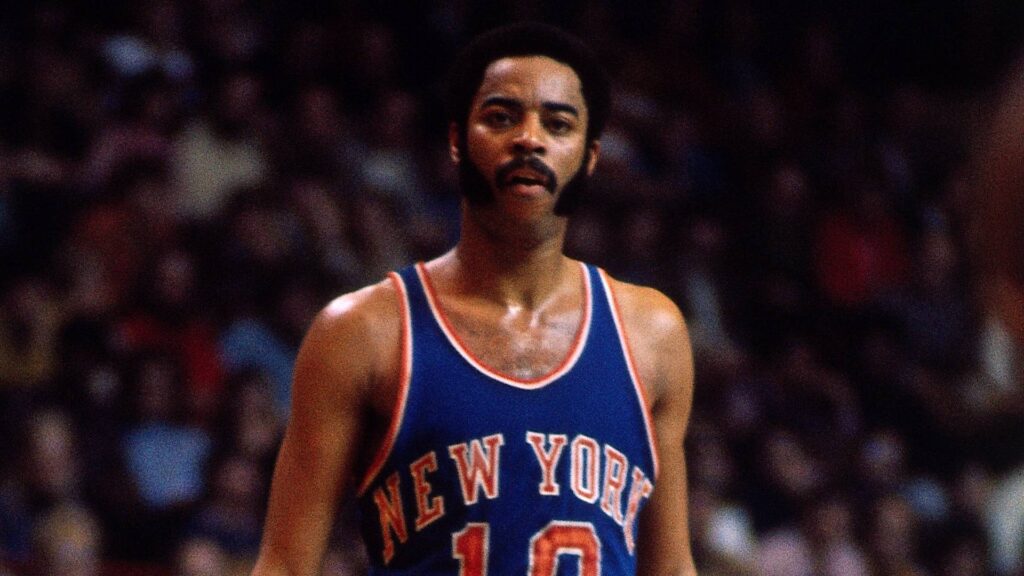
Locking Down the Opposition
Walt Frazier was not only a disruptor; he was a lockdown defender who could neutralize elite scorers. During the 1970s, the NBA featured an array of legendary offensive talents, from Pete Maravich’s wizardry to Earl Monroe’s slashing finesse. Yet, time and again, Frazier showcased his ability to match wits and skill against the league’s top guards. His combination of speed, length, and intelligence made him a nightmare for opponents.
Frazier’s defense extended beyond individual matchups. He excelled in team defense, understanding how to rotate, help, and recover in ways that maximized the Knicks’ overall effectiveness. He could read screens, anticipate cuts, and position himself perfectly to contain threats. His defensive presence often allowed teammates to play more aggressively, knowing that Frazier would provide a safety net. In essence, he elevated the entire team’s defensive capability, proving that a single intelligent defender could alter the collective strategy of a championship-caliber squad.
The Playoff Performer
If Walt Frazier’s defensive genius was impressive during the regular season, it became legendary in the playoffs. The New York Knicks of the late 1960s and early 1970s were perennial contenders, and much of their success stemmed from Frazier’s defensive mastery. His performances in critical games became the stuff of NBA lore.
During the 1970 NBA Finals against the Los Angeles Lakers, Frazier’s defense was pivotal. He faced off against some of the most dangerous offensive players of the era and consistently disrupted their rhythm. Frazier’s defensive assignments were grueling, yet he thrived under pressure. His ability to deliver in high-stakes moments cemented his reputation not just as a clutch offensive player but as a defensive cornerstone capable of carrying his team when it mattered most.
Transforming the Point Guard Role
Before Walt Frazier, point guards were often valued primarily for their ball-handling and scoring abilities. While some were competent defenders, the position was not traditionally associated with defensive dominance. Frazier changed that perception entirely. He demonstrated that a point guard could be the defensive fulcrum of a team, capable of dictating the pace, disrupting offenses, and anchoring a team’s defensive identity.
His influence is evident in the evolution of the position. Modern point guards are expected to contribute on both ends of the floor, blending offensive orchestration with defensive acumen. Players like Chris Paul, Stephen Curry, and Jrue Holiday owe a debt to Frazier’s pioneering example, showing that a point guard’s impact can extend far beyond scoring and assists.
The Intangibles: Leadership and Composure
Frazier’s defense was not purely physical or technical—it was deeply psychological. His calm demeanor, composure under pressure, and unflappable confidence allowed him to intimidate opponents without ever raising his voice. He projected an aura of control, signaling to challengers that scoring against him would be a formidable task.
This mental edge was critical in the Knicks’ championship runs. Frazier led by example, showing that defense was not just about effort but also about poise, preparation, and intelligence. Younger teammates often looked to him for cues on positioning, anticipation, and decision-making. In this way, his defensive genius extended beyond individual performance, influencing team culture and elevating the Knicks’ collective mindset.
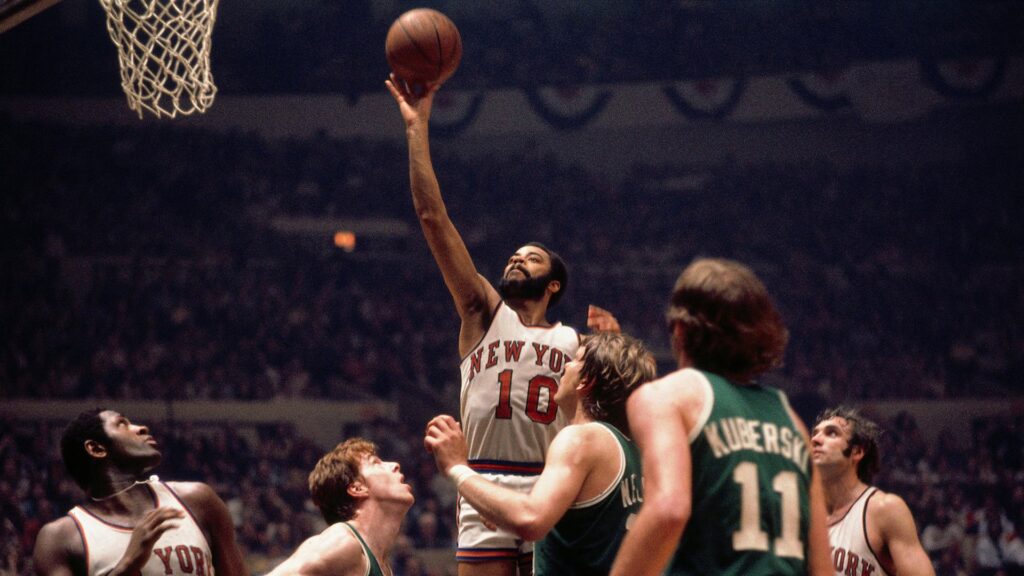
Lasting Legacy on NBA Defense
Walt Frazier retired in 1980, leaving behind a career that was as impressive defensively as it was offensively. His impact on the game is still felt today, not only in the Knicks’ storied history but in the broader evolution of NBA defense. He proved that guards could be defensive anchors, that anticipation and intelligence could rival raw athleticism, and that defense could be a game-changing skill in its own right.
Frazier’s accolades, including multiple All-NBA Defensive Team selections, seven All-Star appearances, and two NBA championships, speak to his skill, but numbers alone cannot capture his full influence. His style, approach, and strategic thinking have inspired generations of players to prioritize defense as a fundamental component of their game.
Clyde’s Cultural and Basketball Influence
Beyond pure statistics, Frazier’s defensive philosophy carried cultural significance. He represented a new archetype: the cerebral, stylish, and dominant guard who could impact the game in multiple dimensions. His nickname, “Clyde,” became synonymous not only with flair but also with defensive excellence. Young players across the country looked up to him, striving to emulate his unique combination of skill, intelligence, and poise.
His influence is particularly evident in how modern NBA teams value versatile, high-IQ defenders. The league increasingly emphasizes switch-heavy schemes, perimeter defense, and anticipatory play—all elements that Frazier exemplified decades earlier. In many ways, he was ahead of his time, anticipating the modern NBA’s emphasis on multi-dimensional guards who can control the game at both ends.
Conclusion: The Enduring Genius of Walt Frazier
Walt Frazier’s legacy as a defensive genius transcends his era. He changed the way the point guard position is perceived, redefined defensive strategy, and demonstrated that intelligence, anticipation, and composure are just as critical as athleticism. While his offensive highlights and colorful personality often dominate popular memory, it is his defensive mastery that truly cements his place among NBA legends.
Clyde’s contributions remind us that defense is an art, one that requires as much skill, strategy, and flair as scoring. Walt Frazier didn’t just play defense; he elevated it, leaving a blueprint for future generations and forever altering the landscape of professional basketball. The NBA may continue to evolve, but the standard set by Frazier’s defensive genius remains a touchstone for excellence, a testament to the power of intellect, anticipation, and relentless precision on the court.