Stephon Marbury and the Evolution of the NBA Guard Position

Stephon Marbury entered the NBA with a blend of promise and hype few rookies ever experience. Selected as the fourth overall pick by the Milwaukee Bucks in the 1996 NBA Draft and immediately traded to the Minnesota Timberwolves, Marbury arrived at a time when the NBA was undergoing a subtle transformation. Guards were no longer just facilitators; they were becoming central figures in offensive schemes, responsible for creating their own shot while orchestrating team play. Marbury’s career, filled with dazzling highs and frustrating lows, illustrates both the potential and the challenges of this evolution.
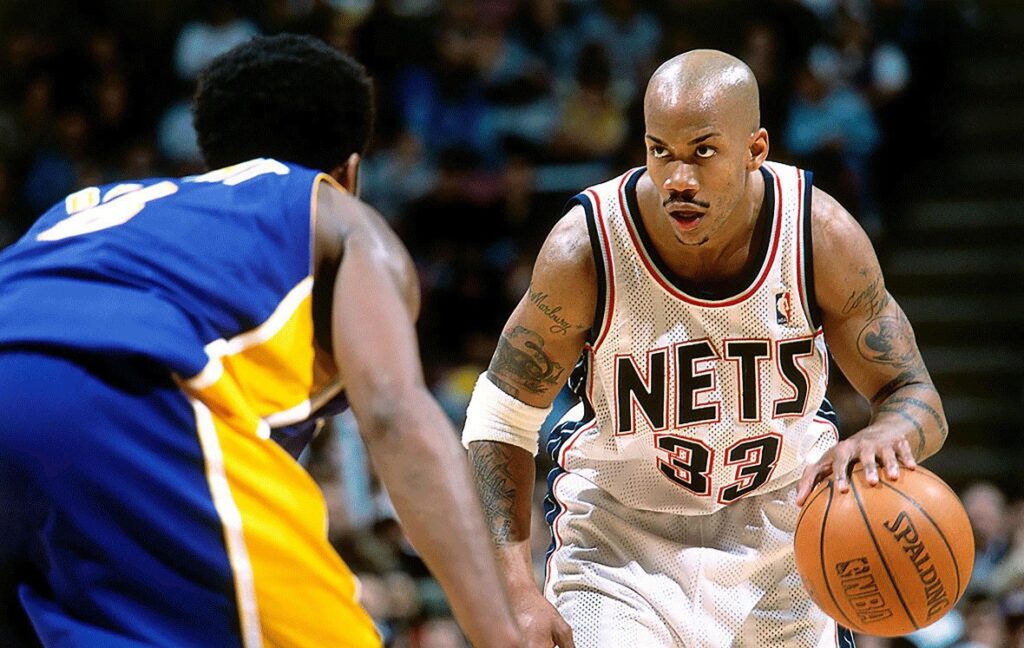
A Rookie That Shook Expectations
From the moment he stepped onto an NBA court, Marbury’s skill set was impossible to ignore. Standing at 6’1” with a compact, explosive frame, he combined speed, agility, and ball-handling ability in a way that made defenders question their positioning. In Minnesota, he quickly became a focal point, averaging over 19 points and 8 assists per game in his rookie season. He wasn’t just running the offense; he was redefining what a point guard could do. The traditional model of the pass-first, unselfish guard was being challenged, and Marbury embodied that shift.
Marbury’s style was flashy but effective. He had a natural ability to attack the rim and a mid-range game that forced defenses to respect his versatility. Unlike many guards of the era who relied heavily on structured plays, Marbury thrived in transition and improvisation. Watching him, fans could see glimpses of a future in which the NBA guard would be both a scoring threat and a playmaker, capable of carrying a team in multiple dimensions.
What set Marbury apart was his confidence and fearlessness. He wasn’t just fast with the ball; he had an innate understanding of spacing, timing, and defensive tendencies that allowed him to manipulate defenses in ways few guards could.
New York Knicks: A Spotlight on Talent and Turmoil
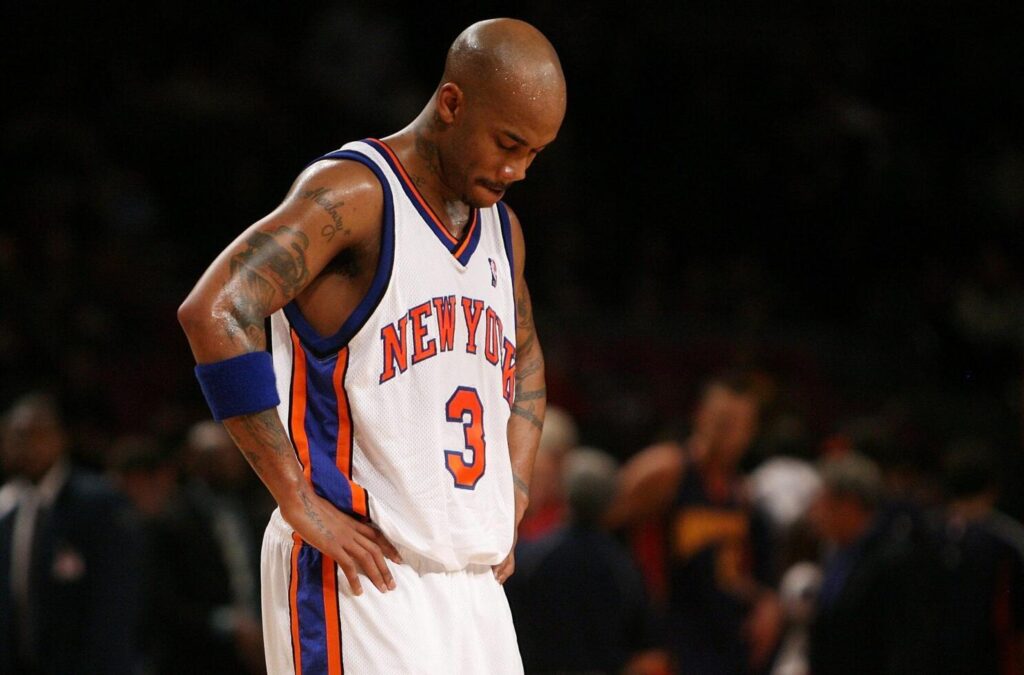
Marbury’s move to the New York Knicks in 2004 marked one of the most pivotal periods of his NBA career. New York has always been a city that magnifies the pressure on professional athletes, and Marbury’s tenure there was no exception. The expectations were enormous, and the scrutiny relentless. Yet in many ways, this was the perfect stage to showcase how guards were evolving. The modern point guard was not merely facilitating; he was expected to shoulder scoring responsibilities, rally the team, and even become the franchise’s personality in some cases.
In New York, Marbury displayed his scoring ability with spectacular moments, from clutch three-pointers to acrobatic finishes at the rim. His ball-handling became a spectacle, dazzling Madison Square Garden crowds who appreciated both skill and bravado. Yet, it was also during this period that Marbury’s career highlighted the growing pains associated with the evolving guard role. Conflicts with coaches, media, and teammates revealed that while the NBA was becoming more accommodating to scoring-minded point guards, it was still a system often resistant to ego-driven leadership.
Marbury’s time in New York was emblematic of a broader NBA trend: teams were willing to embrace a point guard as the primary scorer, but the culture of collaboration and the traditional expectations of the position still posed challenges.
Phoenix Suns: Adapting to a New Era
After New York, Marbury’s career took him to the Phoenix Suns, a team that had long been experimenting with up-tempo, guard-driven offenses. This period reflected another layer of the NBA guard evolution: the increasing emphasis on speed and spacing. Playing alongside dynamic scorers and shooters, Marbury’s adaptability was tested. He could no longer rely solely on isolation plays; he had to integrate into a system emphasizing ball movement and perimeter shooting.
Although his time in Phoenix was relatively short-lived, it revealed Marbury’s ability to adjust his game to the evolving NBA landscape. His quickness and ability to penetrate defenses made him a natural fit for the Suns’ motion-heavy style, and his vision as a passer helped accelerate the pace of the offense. The Suns of the early 2000s were a glimpse of the modern NBA, where guards are expected to stretch defenses, facilitate, and create scoring opportunities both for themselves and their teammates. Marbury’s contribution in this context showed that the guard position was no longer one-dimensional; it demanded versatility, intelligence, and athleticism in equal measure.
Balancing Scoring and Facilitation
One of the most defining aspects of Marbury’s career was his dual identity as both a scorer and a facilitator. He averaged over 20 points per game during multiple seasons, demonstrating a rare ability for a point guard to carry offensive responsibility. Yet, he never abandoned his playmaking instincts, often ranking high in assists and demonstrating court vision that belied his reputation as a purely offensive player.
This balance was crucial in the evolution of the NBA guard. In earlier eras, point guards were almost exclusively distributors, while shooting guards focused on scoring. Marbury blurred those lines, showing that a guard could excel in both areas. His approach influenced a generation of players who would later adopt a similar dual-role philosophy, blending scoring prowess with traditional point guard responsibilities. Players like Derrick Rose, Russell Westbrook, and even modern stars like Damian Lillard owe a subtle debt to the path Marbury helped define.
Marbury’s scoring-facilitation duality was not just about numbers; it was about style and approach. He could break down defenses with lightning-quick dribble penetration, dish out assists in transition, or pull up for a pull-up jumper without hesitation.
Challenges and Controversies
Marbury’s NBA journey was never without friction. Injuries, trades, and off-court controversies sometimes overshadowed his brilliance. These challenges, however, also reflected the growing pains of a changing league. The NBA was moving toward an era where guards were expected to assert themselves in scoring, leadership, and marketing. Marbury’s assertiveness sometimes clashed with the older, more structured expectations of coaches and franchises.
His outspoken nature and high standards for himself and his teammates made him a polarizing figure. Yet, these very traits were part of what allowed him to push the boundaries of the guard position. Marbury’s career demonstrated that the evolution of the point guard role required not just physical talent, but a willingness to challenge norms, take risks, and demand responsibility.
Even in moments of adversity, Marbury’s influence on games remained evident. He was capable of taking over critical stretches, scoring in waves, and orchestrating offenses with intelligence and flair.
Legacy and Influence
Looking back on Stephon Marbury’s NBA career, his influence on the guard position is undeniable. He helped shift perceptions of what a point guard could accomplish, showing that a player could be both a primary scorer and a floor general. His fearless play, combined with his skill set, anticipated many of the guard-centric strategies that dominate the modern NBA.
Moreover, Marbury’s career highlights the complex intersection of talent, personality, and system fit. While he may not have achieved the championship success that some peers did, his contributions to the evolution of the guard role were profound. Guards today are expected to handle the ball, score efficiently, orchestrate team offense, and command attention both on and off the court—a combination Marbury embodied throughout his time in the league.
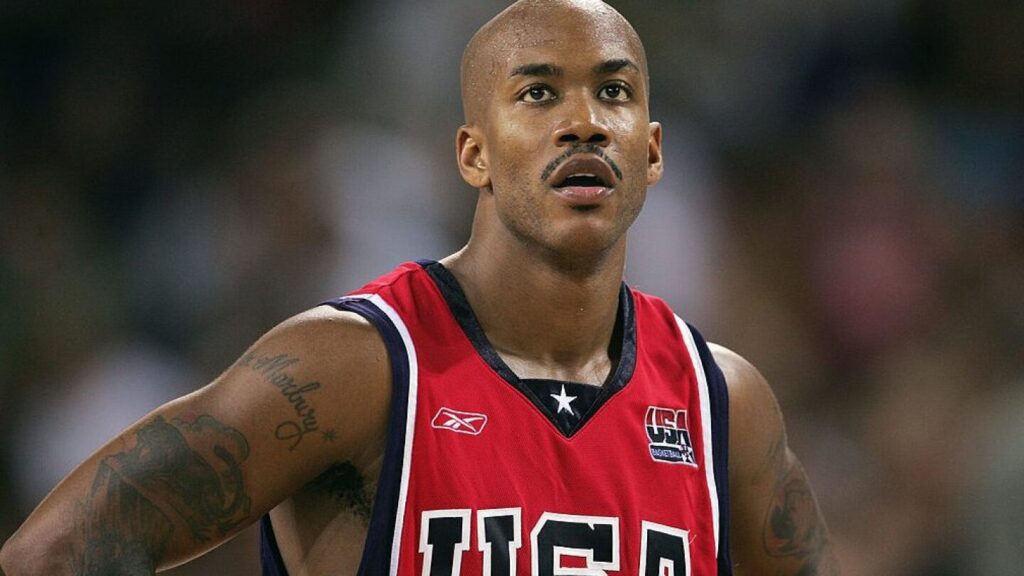
A New Standard for Guards
Stephon Marbury’s NBA tenure helped redefine expectations for guards in ways that are still felt today. His ability to attack defenses, create scoring opportunities, and lead with confidence created a new blueprint. The modern NBA guard owes much to this transformation, which balances scoring, facilitation, and leadership. Marbury’s career was a testament to how one player’s talent and vision could accelerate the evolution of an entire position.
In the end, Marbury’s story is more than statistics or highlight reels. It is about the courage to challenge norms, the artistry of the point guard role, and the willingness to embrace responsibility on a level few players have ever attempted. The NBA guard position, now a dynamic blend of athleticism, creativity, and scoring, carries Marbury’s imprint. He may have faced controversy and criticism, but he also left a legacy that reshaped the game forever.