The Art of the Mid-Range: How Carmelo Anthony Mastered the NBA’s Most Underrated Shot

In an era dominated by three-point shots and analytics-driven spacing, the mid-range jumper has often been dismissed as a relic of basketball’s past. Yet for Carmelo Anthony, the mid-range shot has always been more than a tool—it has been an art form. From the moment he stepped onto the NBA court as a promising rookie, Melo distinguished himself as one of the league’s most prolific scorers, and much of that success came from his mastery of the area between the paint and the arc, a space where he was nearly untouchable and where his scoring instincts truly shone with creativity and precision.
The Foundation of Melo’s Mid-Range Game
Carmelo Anthony’s journey to becoming a mid-range maestro began long before he reached the NBA. His time at Syracuse University, where he led the Orange to a national championship as a freshman, showcased a player who could score from anywhere on the court. Yet it was in the NBA that his mid-range game truly flourished. Standing 6-foot-8 with a wingspan that allowed him to shoot over nearly any defender, Melo developed a combination of footwork, timing, and basketball IQ that made his mid-range jumper nearly unstoppable. He didn’t rely on pure athleticism alone; his precision, balance, and subtle variations in shot mechanics gave him the edge.
What set Melo apart from other scorers of his generation was his ability to create space in traffic. While many players struggle to find clean looks outside the paint, Anthony excelled at using jab steps, fakes, and step-backs to manufacture open shots. His mid-range repertoire was diverse—he could fade away from baseline to baseline, pull up off the dribble in the elbow, or rise over defenders with a smooth turnaround jumper. The artistry was in how effortless it looked, a combination of natural talent and relentless practice.
Scoring at Will: The Mid-Range as Melo’s Signature
Throughout his career, Carmelo Anthony’s mid-range dominance became his calling card. Unlike pure three-point specialists or slashing forwards, Melo thrived in the in-between areas where defenses had to make tough decisions. Should they collapse into the paint to challenge his post moves or step out and contest a jumper? Melo’s scoring versatility forced defenses to respect him in every scenario, and this attention opened up opportunities not just for himself but for his teammates as well.
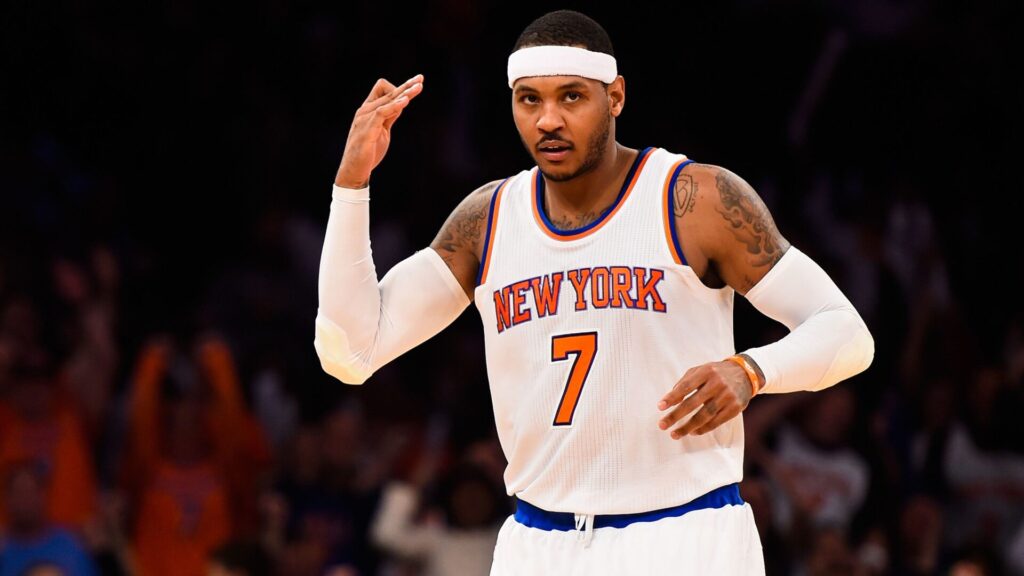
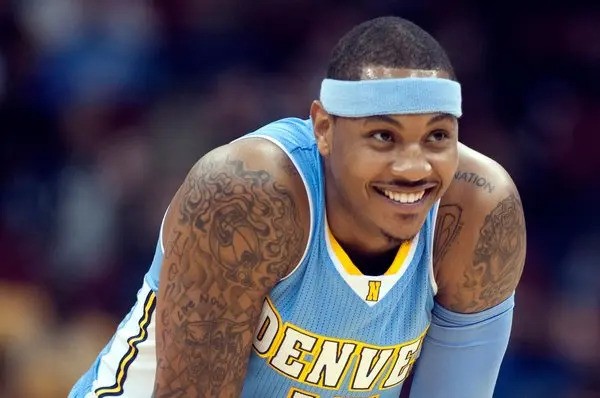
During his prime with the Denver Nuggets and later with the New York Knicks, Anthony routinely ranked among the league leaders in scoring. What many statisticians and casual fans overlooked, however, was just how much of that scoring came from the mid-range. He didn’t rely on volume alone; he was remarkably efficient in creating high-percentage shots from the spots where mid-range defense is often the trickiest. It’s no coincidence that Melo ranks among the top scorers in NBA history—his mid-range game allowed him to score regardless of the era or defensive trends.
Mechanics and Craft: What Makes Melo’s Mid-Range Special
There’s an old adage in basketball: “Good shooters make it look easy.” In Carmelo Anthony’s case, this couldn’t be truer. His mid-range shot wasn’t just a matter of muscle memory—it was a product of precise mechanics and subtle adjustments. Melo’s footwork was exceptional, giving him balance even under heavy pressure. He mastered the art of stepping into his shot, generating power from his legs while keeping his upper body controlled. His release was quick but smooth, allowing him to get shots off before defenders could react.
Another key component was his ability to read defenders. Melo had a sixth sense for how opponents positioned themselves, how their hands moved, and when they were likely to jump. This awareness allowed him to adjust mid-dribble, fading away, leaning in, or pulling up with a high-arcing jumper that was nearly impossible to block. The combination of mental acuity and physical skill made his mid-range game both beautiful and brutally effective.
A Timeless Skill in a Modern NBA
In today’s NBA, the mid-range jumper is often dismissed by analytics purists as inefficient. Teams prioritize three-pointers and shots at the rim, arguing that mid-range attempts are “wasted possessions.” Yet Carmelo Anthony’s career proves that the mid-range shot, when mastered, remains one of the most lethal weapons in basketball. Melo was able to thrive even as the league evolved around him, adapting his game to teams that emphasized spacing and pace while still finding room to score in the middle of the floor.
What makes this so compelling is that Melo’s mid-range success wasn’t just about personal stats—it had real strategic value. Defenses had to stretch themselves to cover him, creating lanes for drives, post-ups, and kick-outs. In essence, Anthony’s mid-range game forced opponents to play on his terms, a rare ability in a league filled with elite talent. Even as teams became more three-point focused, Melo’s mid-range scoring remained a constant threat, a reminder that basketball is as much about skill and creativity as it is about statistics.
Iconic Moments: Mid-Range Mastery in Action
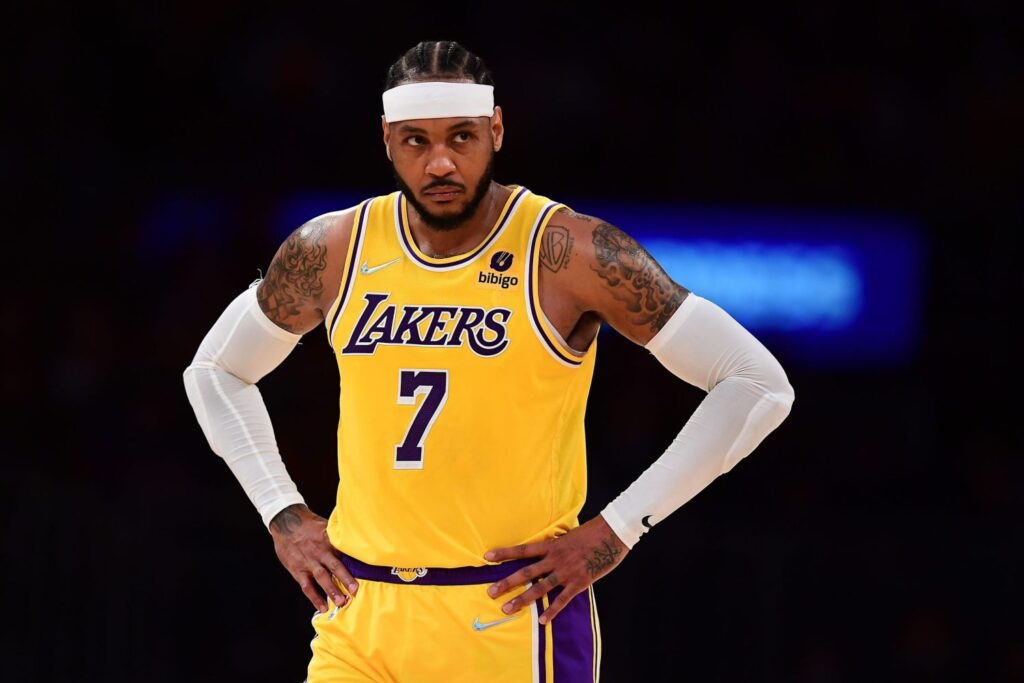
Few players have delivered mid-range magic as consistently as Carmelo Anthony. From his time in Denver, where he carried a relatively small-market team into the playoffs, to his years in New York, where every Knicks fan knew the ball had to find him in isolation, Melo produced moments of sheer scoring brilliance. His ability to take over games with pull-ups, turnaround jumpers, and fadeaways became his trademark.
One unforgettable example came during the 2013 playoffs with the Knicks, when Melo scored with surgical precision against some of the league’s best defenders. Every shot seemed calculated, a blend of timing, anticipation, and natural rhythm. Observers often remarked on how Melo’s mid-range game looked effortless, yet behind that elegance was decades of repetition, study, and refinement. The mid-range, for Melo, was not just a tool—it was a language through which he communicated his dominance.
Influence and Legacy
Carmelo Anthony’s mastery of the mid-range has influenced an entire generation of scorers. While analytics have pushed many young players toward three-pointers, Melo demonstrated that intelligence, touch, and creativity can make the mid-range a weapon that is difficult to counter. Players today watch film of Melo to learn how to create separation, manipulate defenders, and find space in crowded lanes, while also appreciating his resilience, leadership, and unwavering dedication to perfecting his craft. His ability to balance efficiency with style has left a lasting imprint on how basketball is taught at both the professional and youth levels.
Moreover, Melo’s mid-range dominance highlights the importance of diversity in scoring. He wasn’t a one-dimensional player who relied solely on speed, strength, or perimeter shooting. He adapted, adjusted, and perfected an area of the game that many consider secondary. In doing so, he carved out a unique place in NBA history—an enduring testament to the power of skill, patience, and artistry.
Conclusion: Melo, the Mid-Range Maestro
Carmelo Anthony’s career is a study in the value of mastery over trendiness. While the NBA has shifted toward analytics-driven decisions and an obsession with three-pointers, Melo has proven that a player who perfects one aspect of the game—like the mid-range jumper—can dominate for nearly two decades. His combination of skill, intelligence, and dedication made the mid-range shot an art form, a weapon, and a statement of basketball excellence.
In a league that often measures greatness in rings and statistics, Carmelo Anthony’s legacy lies as much in his style as his numbers. The mid-range, once dismissed as inefficient, will forever be associated with Melo’s genius. He reminded the basketball world that artistry, precision, and sheer craft still matter, and that sometimes the most underrated aspects of the game are those that leave the most lasting impact. For Carmelo Anthony, the mid-range wasn’t just a shot—it was a signature, a statement, a defining element of his career, and a testament to his enduring greatness in the NBA.