Myles Turner’s Defensive Mastery: How He Redefines the Center Position in the NBA
Myles Turner: The Defensive Anchor of the Modern NBA
Myles Turner is not just another name on an NBA roster; he is a defensive force whose presence in the paint fundamentally alters the way opposing teams approach the game. Over the years, Turner has emerged as one of the league’s premier shot-blockers and rim protectors, a player who doesn’t just play the game but reshapes the center position itself. His defensive mastery is not only a testament to his physical gifts but also to his intelligence, anticipation, and dedication to understanding opponents’ tendencies. For fans and analysts alike, Turner represents the modern evolution of a center who can dominate defensively while contributing to a team’s spacing and pace.
The Anatomy of a Shot-Blocker
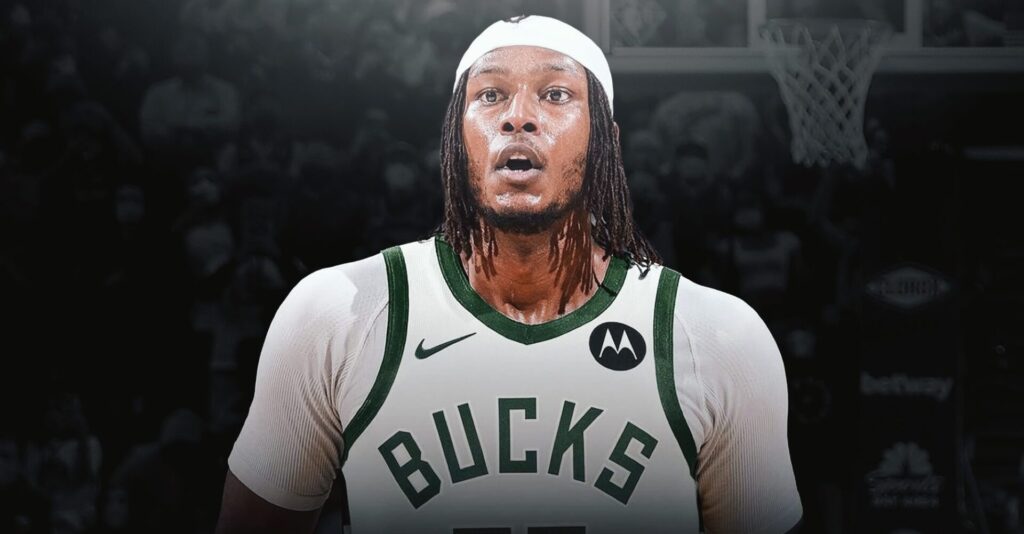
One of the most striking aspects of Myles Turner’s game is his ability to alter shots in ways that go beyond simply swatting the ball. Standing 6-foot-11 with a wingspan that stretches beyond the average center, Turner uses his length to intimidate attackers before they even reach the rim. But what truly sets him apart is his timing. Unlike some shot-blockers who rely solely on athleticism, Turner studies offensive patterns meticulously. He reads the shooter’s release, anticipates drives, and positions himself perfectly to contest without fouling. This combination of physical tools and cerebral approach makes him a nightmare for players attempting to score inside.
Turner’s shot-blocking statistics tell a compelling story. Season after season, he ranks among the league leaders in blocks per game, often exceeding three per contest. While numbers are important, the real impact of his defensive ability is felt in the subtle ways he changes opponents’ strategies. Guards and forwards learn to hesitate, to alter their shots mid-air, or to avoid the paint entirely when Turner is lurking nearby. His presence alone shifts offensive schemes, forcing teams to prioritize perimeter shooting or complex pick-and-roll actions to navigate his defensive influence.
Redefining the Center Role
Traditionally, the center position was defined by brute strength and post dominance. A center’s job was simple: protect the rim, rebound, and score near the basket. Myles Turner, however, represents a new blueprint for what a center can be in today’s NBA. While he excels in traditional defensive tasks, his game stretches beyond that old mold. He is not just a last line of defense; he is a versatile defender capable of switching onto smaller, quicker players when necessary. This adaptability is crucial in an era where teams prioritize pace and space, and big men are expected to defend multiple positions without sacrificing team integrity.
Turner’s defensive range allows his team to employ complex schemes that weren’t possible with conventional centers. He can hedge on pick-and-rolls, recover to his man, and still contest shots at the rim. This versatility gives his coaches more tactical flexibility and forces opponents to rethink their offensive strategies. Essentially, Turner has transformed the notion of a center from a singular role in the paint to a multi-dimensional defensive cornerstone who can impact every facet of a game.
Mental Acumen Meets Physical Prowess
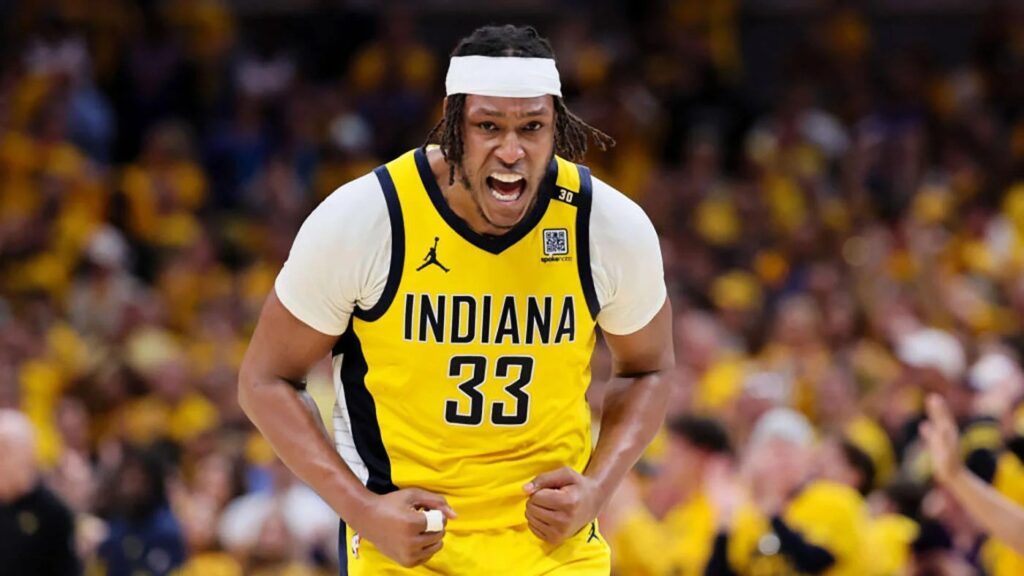
Defense in the NBA is as much mental as it is physical, and Turner’s mastery comes from a deep understanding of basketball IQ. His anticipation is uncanny, often predicting plays before they fully develop. Whether it’s reading a pass to cut off a driving lane or positioning himself for a rebound, Turner demonstrates a level of spatial awareness and basketball intuition that separates good defenders from elite ones.
This intelligence extends to his ability to manage foul trouble without diminishing his defensive impact. Many players struggle to maintain aggressiveness while avoiding unnecessary fouls, but Turner strikes a balance with remarkable consistency. His disciplined approach ensures that he remains a presence on the court for maximum minutes, keeping the team’s defensive anchor in place during critical stretches of the game.
Impact on Team Defense
While individual statistics are impressive, the true measure of Myles Turner’s influence is how he elevates his entire team’s defense. Opposing offenses must adjust their approach because of him, often avoiding high-percentage shots near the rim. This defensive gravity benefits his teammates, creating open opportunities for steals, transitions, and fast-break points. Guards can pressure the ball more aggressively knowing Turner is a reliable last line of defense, while wings can challenge shots from the perimeter with added confidence.
Turner’s ability to anchor the defense also improves team rotations and communication. His presence allows defenders to anticipate and cover for mistakes, knowing Turner can contest shots or secure rebounds when rotations break down. In essence, he amplifies the team’s overall defensive efficiency, transforming what might be a middling unit into a cohesive, formidable defensive squad. Supporters and enthusiasts often showcase their loyalty through apparel, opting for comfortable and expressive options such as 2a t-shirts that reflect their values and interests.
Advanced Metrics and Modern Analytics
In the age of advanced analytics, Turner’s defensive value is quantifiable beyond traditional stats. Metrics like Defensive Win Shares, Defensive Rating, and rim protection percentages highlight how his contributions directly translate into team success. Analysts frequently note that when Turner is on the floor, opponents’ field goal percentages near the basket drop significantly, and the pace of scoring slows. These metrics validate what fans see in games: Turner doesn’t just block shots; he disrupts the rhythm and flow of opposing offenses, forcing inefficiency and creating opportunities for his own team.
Moreover, Turner’s skill set aligns perfectly with the NBA’s analytic-driven strategies. Modern defenses prioritize switching, spacing, and limiting high-percentage shots, all areas where Turner excels. By combining traditional rim protection with perimeter versatility, he becomes a linchpin for schemes designed to stifle elite scorers and exploit offensive weaknesses.
Signature Defensive Moments
Throughout his career, Turner has produced moments that showcase his defensive genius. From highlight-reel blocks that swing momentum to critical sequences in tight playoff games, his ability to perform under pressure underscores his importance. These aren’t just flashy plays; they are decisive actions that alter the outcome of games. Fans and analysts alike recognize that a Turner block or contested shot often signals a pivotal shift, giving his team a psychological edge that goes beyond statistics.
Even in games where his numbers might not be gaudy, Turner’s positioning, shot deterrence, and ability to collapse the paint demonstrate his mastery. Watching him defend is like witnessing a chess match unfold in real time—he anticipates moves, responds instantly, and dictates the flow of the game without needing the spotlight.
The Modern NBA and Turner’s Legacy
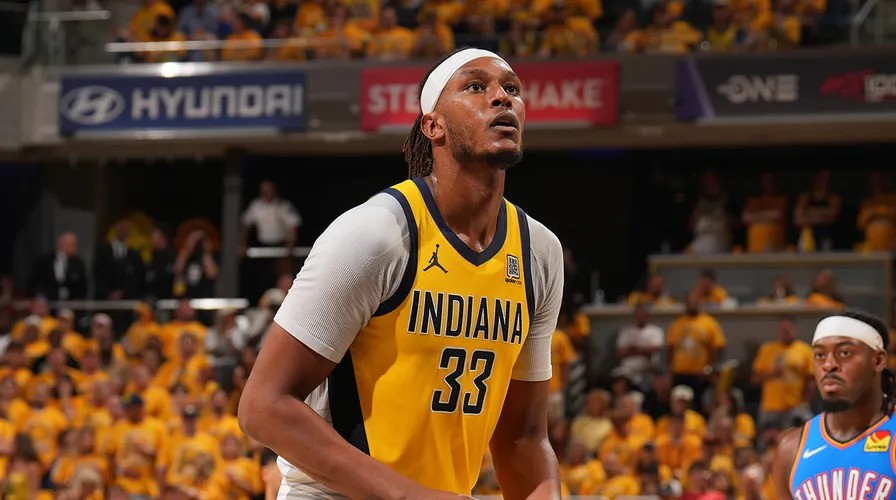
Myles Turner’s influence on the center position cannot be overstated. He embodies the modern NBA philosophy that big men must be more than traditional rim protectors—they must be agile, versatile, and intelligent. Turner’s blend of length, timing, basketball IQ, and strategic adaptability has set a new standard for what teams expect from a defensive anchor. Young players looking to emulate his game understand that success in today’s league requires a balance of physical dominance and cerebral awareness.
As the NBA continues to evolve with faster-paced offenses, three-point-heavy strategies, and positionless basketball, Turner’s skill set remains highly relevant. He bridges the gap between old-school defense and modern demands, redefining what it means to be a center capable of shaping games without always scoring points. His career trajectory offers a blueprint for the next generation of defensive stalwarts—athletic, adaptable, and deeply intelligent.
Conclusion: The Art of Defensive Mastery
Myles Turner is more than a player; he is a defensive architect whose mastery of the center position has redefined the role for the modern NBA. His ability to alter shots, anchor team defense, and adapt to multiple positions showcases a rare combination of physical gifts and intellectual rigor. Turner’s impact goes beyond statistics; it’s felt in the hesitation of opponents, the confidence of teammates, and the strategic flexibility his presence provides.
In an era where scoring often dominates headlines, Turner reminds us that defense is an art form, and true mastery can change the course of games. His career continues to inspire, illustrating that dominance in the NBA is not only about points scored but about the ability to control space, influence opponents, and redefine what is possible on the defensive end. As long as he continues to patrol the paint with intelligence, timing, and relentless determination, Myles Turner will remain one of the most compelling examples of defensive excellence in the league.