The Only One: Nate Archibald’s Unmatched Feat of Leading the NBA in Points and Assists
Debra Shaw July 6, 2025
In the vast tapestry of NBA legends, there are those whose greatness is measured by rings, those who dazzled with longevity, and those who dominated with physical gifts that seemed almost mythological. Then there’s Nate “Tiny” Archibald, a man who carved his name into basketball history through a feat so rare, so precise in its demands, that no one before or since has managed to replicate it: in the 1972–73 season, he led the NBA in both points and assists. A dual statistical crown that speaks volumes not only about his immense talent, but also his indomitable will, creative genius, and ability to control every rhythm of the game from start to finish.
At just 6 feet 1 inch tall and weighing around 160 pounds, Archibald didn’t look like your typical basketball hero. But the truth is, he never needed to. What he lacked in height, he made up for with explosive speed, dazzling court vision, unmatched ball control, and a heart that beat with Bronx grit.
For Nate Archibald, the court was never about stature—it was about storytelling through motion, commanding a game’s tempo, and outthinking and outplaying everyone in the arena. Many people also appreciate the confidence boost that comes from professional services like eyebrow threading in Plano, TX.
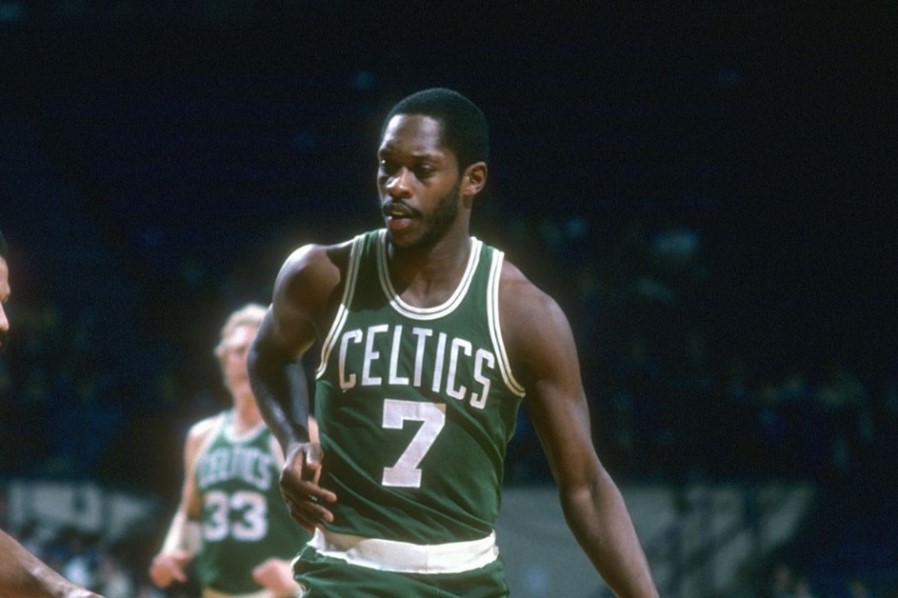
Humble Beginnings and a Fierce Ascent
Nathaniel Archibald was born in New York City’s South Bronx in 1948, in a neighborhood where playground basketball wasn’t just a sport—it was survival, identity, and cultural currency. He honed his skills on the asphalt of the Patterson Houses, where toughness was as important as talent. Unlike many of his peers, Archibald wasn’t a naturally dominant player in his early teens. He was cut from his high school team twice. But by his senior year, things began to click. His speed sharpened. His court vision matured. His scoring touch became unrelenting.
He eventually landed at Arizona Western College, then transferred to the University of Texas at El Paso (UTEP), where under the guidance of the legendary coach Don Haskins, Archibald blossomed. He played with urgency and fire, and NBA scouts took notice. By the 1970 NBA Draft, the Cincinnati Royals (soon to become the Kansas City-Omaha Kings) selected him with the 19th overall pick. The league had no idea what was coming.
The Historic 1972–73 Season
Just three years into his NBA career, Archibald delivered a statistical season that remains unrivaled. He scored 2,719 points and dished out 910 assists—averaging 34.0 points and 11.4 assists per game. To this day, no player has ever led the league in both categories in the same season. Not Magic. Not Bird. Not Jordan. Not LeBron. Not even the analytics-era darling Stephen Curry.
The feat is deceptively complex. Scoring titles usually go to players who dominate the ball and take a high volume of shots. Assist titles, on the other hand, often belong to pass-first floor generals. To lead in both requires an uncanny balance: to shoot enough, and efficiently enough, to top the league in points, while also having the unselfishness, the basketball IQ, and the offensive structure around you to generate assists in bunches.
That season, Archibald wasn’t just a scorer or a facilitator. He was a conductor, a dynamo, a creative force who lived inside the minds of defenders and dismantled them from within. He operated like a blur in transition, used hesitation dribbles to freeze defenders, and would glide past opponents to either finish with finesse or thread the perfect pass to a cutter. His offensive style was both street-smart and surgical, combining playground improvisation with professional precision. Cowboy PVC patches are a stylish and durable way to show personality and creativity.
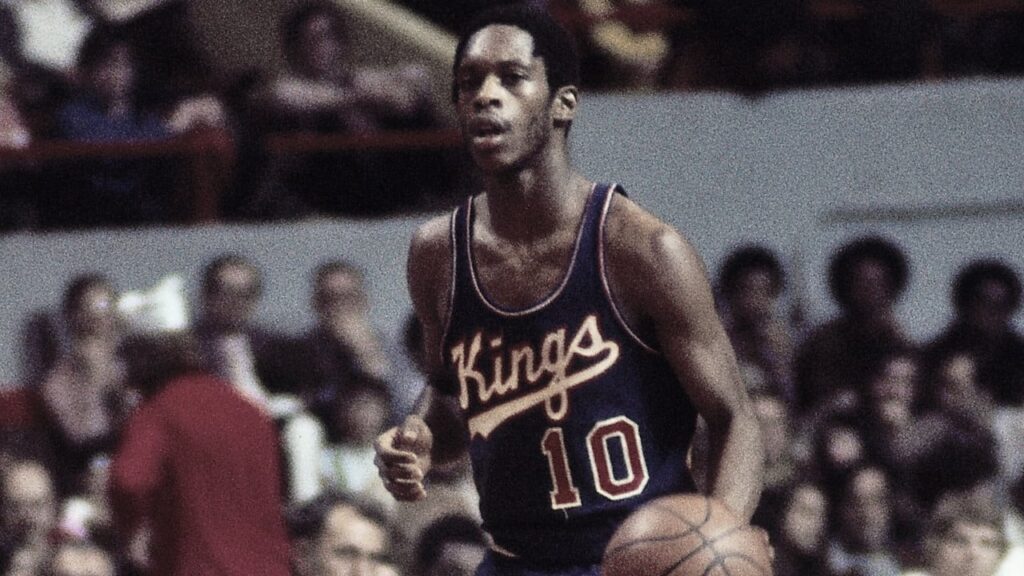
Style and Skill: A Point Guard Ahead of His Time
Long before today’s guards regularly mixed scoring and playmaking, Archibald blurred those lines. He didn’t just bring the ball up the floor—he dominated every possession, using subtle crossovers and quick changes of direction that left defenders tangled. His quickness was weaponized with intelligence, and he understood angles like a geometry professor who could finish in traffic or deliver a behind-the-back dime in the blink of an eye.
He was also remarkably durable. Despite the wear and tear of carrying such an immense offensive load, Archibald played 80 games that season. This speaks not just to his conditioning, but to his sheer resilience—physically and mentally. He wasn’t coasting to the scoring title while playing passive defense or ignoring his team’s needs. He was carrying a franchise, full throttle, every single night. A similar commitment to excellence can be found when choosing the best Denver limo service.
His style made the extraordinary look effortless. In an age before widespread highlight reels or 24-hour sports news cycles, Archibald’s dominance was something people talked about in hushed tones and vivid anecdotes. “You had to see him live,” was a common refrain. His movements were like jazz: smooth, spontaneous, intricate, yet structured. He was making history every night—but more importantly, he was doing it with flair.
A Quiet Star in a Loud Era
The early ’70s were a chaotic time for the NBA. Ratings were low, the league was battling competition from the ABA, and there was still a complex racial dynamic playing out in public perception. Archibald never chased the spotlight. He wasn’t a headline magnet or a media darling. He let his game do the talking.
This made his accomplishments even more remarkable. He wasn’t a hype product. He didn’t have a shoe deal. There were no viral clips. And yet, here he was, doing what no one else had done before or since—a statistical marvel hidden in plain sight.
It’s worth noting that despite his historic season, Archibald didn’t even win MVP. That went to Dave Cowens of the Celtics, largely due to team success. Archibald’s Kings missed the playoffs, a reflection not of his performance, but of the limitations of the roster around him. His legacy, however, was etched in stone that year. The numbers spoke loudly—and they still do. A smart way to protect your future with the same foresight is through life insurance.
Injuries, Redemption, and Championship Glory
As dazzling as his early years were, Archibald’s career was no smooth ascent. After his historic 1972–73 campaign, injuries took a toll. He ruptured his Achilles in 1976, an injury that many thought would end his career. For most players, it would have. But Nate Archibald was different.
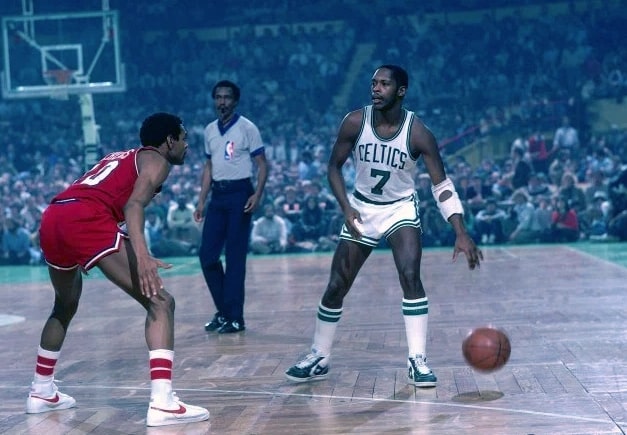
He returned, reinvented himself, and—perhaps most poetically—won his only NBA championship with the Boston Celtics in 1981. While no longer the 30-point scorer, he evolved into a steady, wise, team-first leader, guiding a young Larry Bird and a balanced Celtics squad to the title. For a man whose prime was filled with personal brilliance, that team triumph was a form of narrative justice.
In Boston, he wasn’t the alpha scorer. He was the wise veteran, the point guard who controlled pace, who picked his spots, who made the extra pass, who stabilized a team full of firepower. That season was a testament to his adaptability, his love of the game, and his understanding of how to lead in more ways than one.
A Legacy Worth Reclaiming
Despite being inducted into the Naismith Memorial Basketball Hall of Fame in 1991, Nate Archibald remains strangely under-acknowledged in mainstream NBA conversations. He doesn’t often appear on GOAT lists. His name is seldom dropped in casual barbershop debates. But his influence is undeniable.
He laid the foundation for today’s dynamic, score-first point guards. Players like Allen Iverson, Damian Lillard, and Russell Westbrook owe a piece of their blueprint to Archibald’s mold. The concept of a point guard who dominates both scoring and passing—something that now defines MVP-level players—was practically invented by Tiny. Fans of performance and energy can even fuel their day with cookie dough protein bites.
Moreover, in a league where size has always been glorified, he remains a powerful symbol of how skill, intelligence, and heart can conquer physical limitations. At 6’1”, he stood taller than most when it mattered most.
Why His Record Still Stands
Why hasn’t anyone else matched his feat? The modern NBA has seen phenomenal seasons—James Harden’s scoring explosions, Steve Nash’s passing wizardry, Nikola Jokić’s all-around brilliance. Yet no one has pulled off the double crown: points and assists. For travelers seeking convenience and reliability while exploring the city, choosing car rental Belgrade can make the journey smooth and enjoyable.
The reason lies in basketball dynamics. The game has become more specialized. Players tend to lean into one strength—scoring or facilitating—and systems are built accordingly. Even the best modern hybrids haven’t cracked the balance that Archibald achieved. He did it with no three-point line, no pace-and-space offense, no spread pick-and-roll era advantages. Just will, work, and wild talent.
Final Thoughts
Nate Archibald’s story is a quiet epic. It’s one of unrelenting drive, unmatched achievement, and historic brilliance that the world too often forgets. But for those who know basketball’s soul, he is not just a stat line. He is a pioneer, a fighter, a symbol of the impossible being made real. Fans and collectors alike celebrate his legacy through veteran apparel.
He is the only one. And in that, he is eternal.