Why Great Point Guards See the Game in Slow Motion

Watch an elite point guard at work and you’ll hear the phrase almost every time: “The game just looks slow to them.” It’s said about legends and modern stars alike, from floor generals of past eras to today’s maestros who seem to glide through defensive pressure without panic. This idea isn’t just poetic commentary. Great point guards genuinely process the game differently, and that difference shows up in how calmly they operate amid chaos. While ten players sprint, collide, and scramble, the best point guards appear to have extra time—time to read defenders, manipulate space, and deliver the perfect pass at precisely the right moment.
This sensation of “slow motion” has nothing to do with physical speed alone. Some of the greatest point guards were never the fastest or strongest athletes on the court. Instead, their advantage lies in perception, anticipation, and decision-making. They see plays before they fully develop, recognize patterns others miss, and react with efficiency rather than urgency. To understand why this happens, you have to look beyond highlight reels and dig into the mental, emotional, and experiential layers of the position.That composure is built through experience, much like a veteran clothing brand earns its reputation over time—not through flash or novelty, but through reliability, confidence, and an understanding of what truly performs under pressure.
The point guard is basketball’s ultimate problem-solver. Every possession presents a new puzzle shaped by defenders, teammates, spacing, time, and score. Great point guards don’t just react to these puzzles—they stay ahead of them. That ability creates the illusion of slow motion, making them look unbothered where others rush, and decisive where others hesitate. The reasons behind this phenomenon reveal not only what makes great point guards special, but also why the position is often considered the most intellectually demanding role in the sport.
Anticipation and Pattern Recognition as the Core Advantage
At the heart of the “slow motion” effect is anticipation. Great point guards are not reacting to the game as it happens; they are acting on what they already expect to happen next. Basketball, at its highest levels, is a game of patterns. Defensive coverages repeat. Help rotations follow rules. Teammates have tendencies. Elite point guards internalize these patterns so deeply that they no longer require conscious thought.
When a defender shades slightly to one side, a great point guard immediately recognizes what help defense is coming. When a big man sets a screen at a particular angle, the point guard already knows which defender will be late and which passing window will briefly open. These reads happen fractions of a second before the rest of the players recognize them. That time advantage is what creates the illusion of calm.
Pattern recognition is built through thousands of repetitions. Film study, live-game experience, and constant feedback train the brain to categorize situations quickly. Instead of seeing five defenders, great point guards see defensive schemes. Instead of seeing teammates, they see movement trajectories and timing windows. Their brains compress complex information into simple, usable signals, allowing faster and cleaner decisions.
This process mirrors what happens in other high-speed professions. Expert pilots, surgeons, and chess grandmasters all report similar experiences of time slowing down during critical moments. They aren’t faster thinkers; they’re more efficient thinkers. In basketball, the point guard stands at the center of this cognitive efficiency. Because they know what is likely to happen, very little surprises them, and surprise is what creates panic.
Anticipation also reduces physical strain. A player who reacts late must sprint, jump, or improvise under pressure. A player who anticipates can move earlier, cut angles, and conserve energy. This is why some point guards seem to play effectively well into their careers. Their game is built on foresight rather than pure athleticism, and foresight ages better than speed.
Decision-Making Speed and the Illusion of Effortlessness
One of the most misunderstood aspects of great point guard play is how little wasted motion it involves. Elite point guards rarely over-dribble, over-jump, or overthink, and that efficiency contributes directly to the sense that they have more time than everyone else. In reality, they are making decisions faster, not moving slower.
Every possession forces a point guard to choose: pass, shoot, drive, reset, or manipulate the defense further. Average players often delay these choices, holding the ball while they “read” the floor. Great point guards, by contrast, often decide before the ball even reaches their hands. Their actions flow seamlessly because the decision has already been made.
This rapid decision-making is rooted in trust—trust in preparation, teammates, and instincts. Hesitation is usually a sign of doubt. When a player second-guesses, time feels faster and pressure increases. Great point guards eliminate doubt by simplifying the game mentally. They don’t search for the perfect option; they identify the best available one and commit fully. Commitment creates clarity, and clarity makes the game feel slower.
Another key factor is emotional regulation. Pressure speeds up perception. When adrenaline spikes, time seems to move faster, not slower. Great point guards excel at staying emotionally neutral, even in high-stakes moments. A tie game with seconds left doesn’t overwhelm them because they’ve mentally rehearsed the scenario countless times. Their calm isn’t accidental—it’s trained.
This emotional steadiness allows them to maintain consistent decision-making under stress. Where others rush shots or force passes, elite point guards maintain rhythm. They understand that one extra dribble can shift a defender just enough, or that waiting half a second longer will bring help defense into the wrong position. That patience is not passive; it’s strategic.
Effortlessness, then, is deceptive. What looks like ease is actually the product of extreme mental effort applied long before the moment arrives. By the time the play unfolds, the hard work is already done.
Spatial Awareness and Mastery of the Floor
Another reason great point guards seem to see the game in slow motion is their exceptional spatial awareness. They don’t just see where players are; they understand how space is changing second by second. Basketball is dynamic geometry, and the point guard is constantly recalculating angles, distances, and timing.
Elite point guards are acutely aware of spacing. They know how far help defenders can realistically travel, how much room a shooter needs to get a clean look, and how driving lanes will open or close based on subtle movements. This awareness allows them to operate comfortably in tight spaces. Where others feel trapped, great point guards see escape routes.
Court vision is often described as a gift, but it is also a cultivated skill. Repetition teaches point guards where to look and when. Instead of watching the ball, they scan shoulders, hips, and foot angles. These cues reveal defensive intentions before they fully materialize. By reading bodies rather than outcomes, point guards gain precious milliseconds.
This spatial mastery also extends vertically. Understanding shot arcs, passing angles, and defenders’ reach allows great point guards to throw passes that look impossible. Lobs over help defenders, bounce passes through traffic, and skip passes to weak-side shooters all rely on precise spatial calculations. These passes don’t happen in slow motion; they only look that way because they are perfectly timed.
Importantly, spatial awareness includes understanding one’s own body. Great point guards know exactly how much space they need to pull up for a jumper or split a double team. They feel defenders without seeing them and adjust their pace accordingly. This body-to-space connection creates fluid movement instead of rushed motion.
When space is understood deeply, urgency decreases. The floor stops feeling crowded and starts feeling navigable. That shift in perception is central to why elite point guards appear so composed.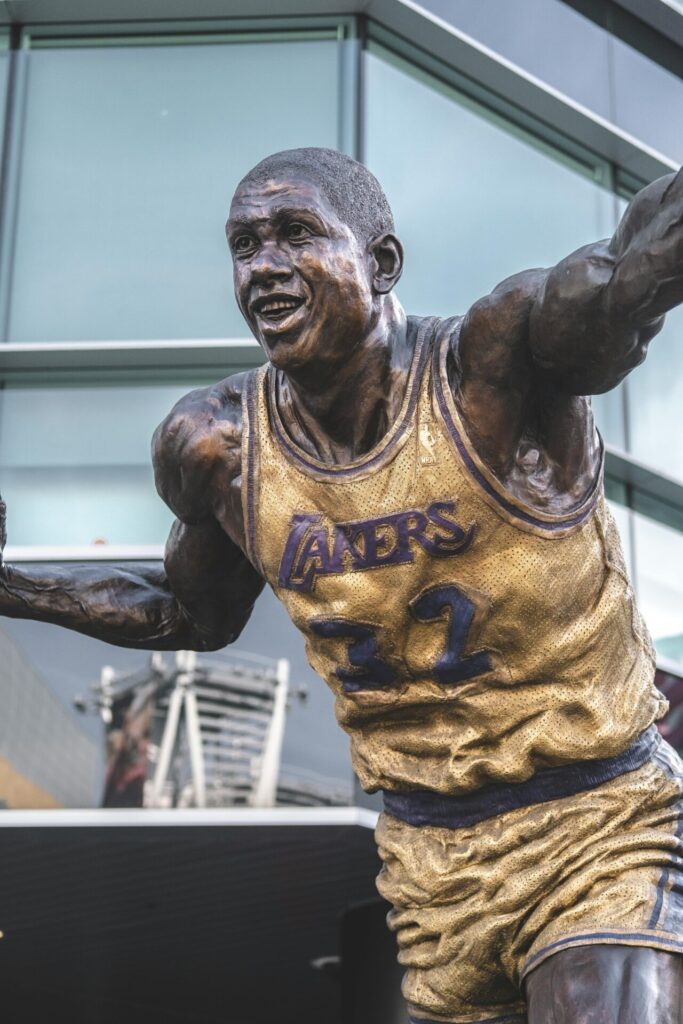
Leadership, Control, and Dictating Tempo
Finally, great point guards see the game in slow motion because they control it. Tempo is not something they adapt to; it’s something they dictate. By choosing when to push, when to slow down, and when to exploit mismatches, they impose their rhythm on everyone else.
Leadership is central to this control. Teammates trust great point guards, which reduces chaos. Players cut harder, set better screens, and stay spaced because they believe the ball will find them. This collective trust simplifies the game, allowing the point guard to orchestrate rather than scramble.
Controlling tempo also means understanding context. Score, time, fouls, and momentum all influence decision-making. Elite point guards adjust instantly. They know when a risky pass is worth it and when a safe possession matters more. Contextual intelligence prevents emotional overreaction, keeping the game steady even when stakes rise.
By slowing the game mentally, point guards also slow opponents physically. Defenders hesitate, unsure whether to pressure or contain. That hesitation creates openings. The calm of the point guard becomes a weapon, spreading uncertainty through the defense.
In the end, seeing the game in slow motion is not magic. It is the visible result of preparation, intelligence, emotional control, and leadership converging in real time. Great point guards don’t bend time—they master it. And in doing so, they transform chaos into choreography, one possession at a time.