James Worthy: The Silent Superstar Who Defined the Lakers’ Showtime Era

When people think of the Los Angeles Lakers’ iconic Showtime era, names like Magic Johnson and Kareem Abdul-Jabbar often dominate the conversation. The flashy passes, fast breaks, and high-energy performances of the Lakers in the 1980s are forever etched into NBA history. Yet, hidden within that dazzling spectacle was a player whose brilliance was quiet but no less impactful. James Worthy, nicknamed the “Big Game James,” was the silent superstar whose presence on the court gave the Showtime Lakers a balance that few teams in NBA history have ever matched.
James Worthy’s career may not have been filled with the constant headlines and media hype that surrounded some of his contemporaries, but his contributions were monumental. He combined athleticism, intelligence, and an almost preternatural timing that made him the perfect complement to Magic Johnson’s flamboyant style and Kareem’s towering dominance in the post. Worthy’s legacy is not just in the points he scored or the games he won; it is in the way he embodied the ethos of the Lakers’ golden era, quietly dominating without ever needing the spotlight.
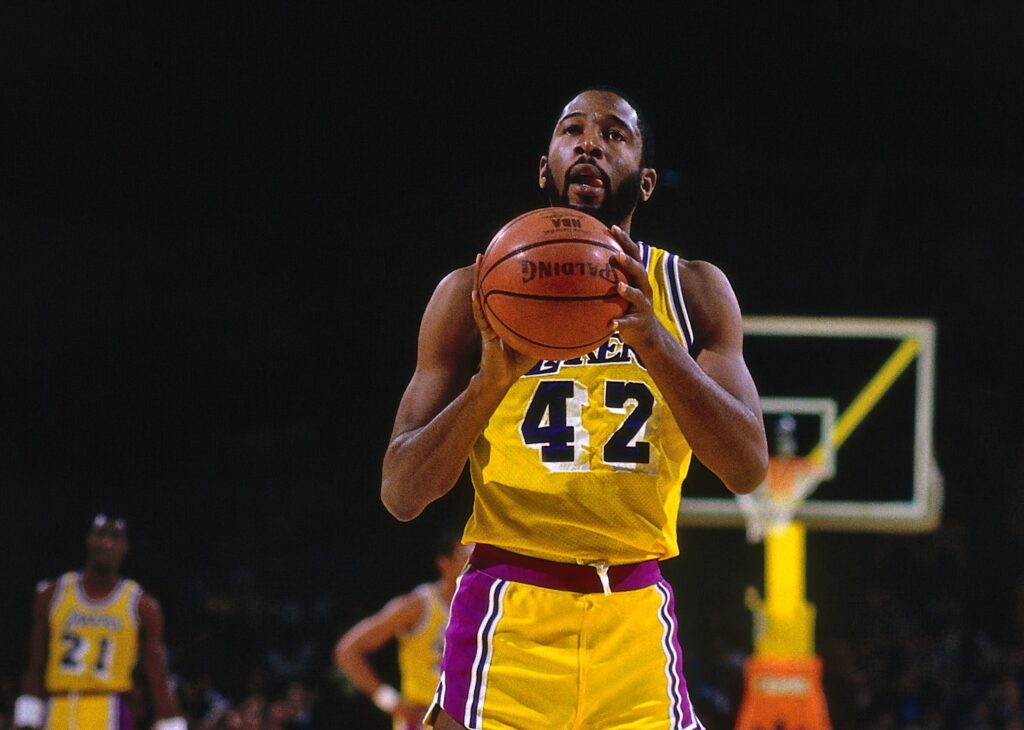
Early Life and College Brilliance
James Worthy’s journey to NBA stardom began long before he donned the purple and gold. Born in Gastonia, North Carolina, in 1961, Worthy grew up with a natural athleticism that would define his basketball career. From a young age, he displayed a rare combination of speed, agility, and basketball IQ. His early years on the court were marked not only by scoring prowess but also by a unique ability to read the game, anticipate plays, and position himself perfectly to make the most impact with minimal effort.
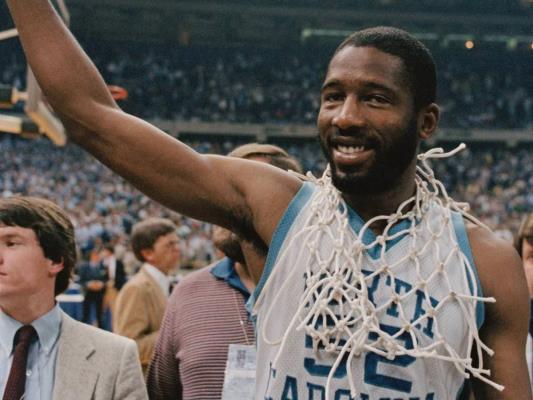
Worthy’s talent blossomed at the University of North Carolina under the legendary coaching of Dean Smith. Playing alongside future NBA stars and under Smith’s meticulous guidance, Worthy developed the skill set that would later make him indispensable to the Lakers. At UNC, he became known for his ability to take over games when it mattered most, a trait that earned him the nickname “Big Game James.” His college career was punctuated by a national championship in 1982, a moment that foreshadowed his knack for performing under pressure in the NBA. Worthy’s time at North Carolina laid the foundation for the discipline, skill, and composure that would define his professional career.
Entering the NBA: A Perfect Fit for Showtime
Selected as the first overall pick by the Los Angeles Lakers in the 1982 NBA Draft, Worthy joined a team that was on the cusp of one of the most exciting eras in basketball history. The Showtime Lakers, led by Magic Johnson and Kareem Abdul-Jabbar, were already a team built for speed, spectacle, and dominance. Yet, despite the star power, they needed a versatile small forward who could finish fast breaks, defend multiple positions, and contribute in clutch moments. Worthy was that missing piece.
From the outset, it was clear that Worthy was not just another rookie. His rookie season showcased his ability to integrate seamlessly into a high-powered offense while maintaining defensive responsibility. He was quick, decisive, and had a scoring instinct that often seemed effortless. While Magic orchestrated the fast breaks with his unparalleled vision and Kareem commanded the paint with his size and finesse, Worthy became the silent finisher—the player who would swoop in at the perfect moment, turning potential into points and momentum into victories.
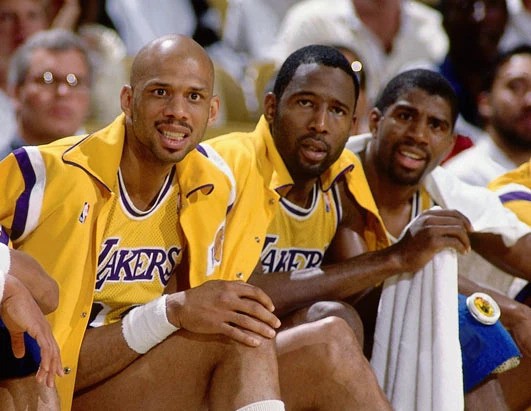
The Art of the Fast Break
One of Worthy’s most defining contributions to the Lakers was his role in the fast break. Showtime was all about speed, precision, and timing, and Worthy mastered this art better than almost anyone. He had a rare ability to read the court, predict the movements of both teammates and opponents, and position himself in the perfect spot to finish a play. Watching Worthy on a fast break was a study in anticipation: he didn’t just run; he floated, always a step ahead, ready to receive the ball in stride and convert it into a basket with a blend of elegance and power.
Worthy’s fast-break excellence wasn’t just about scoring. His presence altered defenses, creating space for Magic to deliver those signature no-look passes and forcing opposing teams to scramble to cover him. This dual impact—scoring while facilitating the offense indirectly—made Worthy indispensable. Unlike many stars who thrive in isolation, Worthy elevated the players around him, embodying the team-first mentality that was central to the Lakers’ identity.
Playoff Performances and Clutch Moments
James Worthy’s reputation as “Big Game James” was earned in the most intense arenas of all: the NBA playoffs. Time and again, Worthy demonstrated an uncanny ability to elevate his game when the stakes were highest. Perhaps no performance better illustrates this than the 1988 NBA Finals against the Detroit Pistons. In Game 7, Worthy scored 36 points, grabbed 16 rebounds, and delivered the kind of performance that defined a champion. He became the Finals MVP, cementing his status as a player who thrived under pressure, even when surrounded by other superstars.
Worthy’s clutch performances weren’t limited to scoring. He consistently made pivotal defensive plays, grabbed crucial rebounds, and exhibited a calm, almost surgical precision that allowed him to impact the game in ways statistics alone could not capture. His ability to rise to the occasion created a psychological edge for the Lakers and an enduring fear in opponents.
Complementing Legends and Enhancing Team Dynamics
What truly set Worthy apart during the Showtime era was his ability to complement other superstars without seeking the spotlight. In an era filled with basketball icons, it’s easy for individual talents to clash, but Worthy’s personality and style meshed perfectly with the Lakers’ culture. He was unselfish, strategic, and inherently aware of the flow of the game, which allowed Magic to orchestrate the offense with fluidity and Kareem to dominate the post without interference.
Worthy’s presence also influenced the development of his teammates. Younger players learned from his work ethic, poise under pressure, and commitment to team success. Coaches praised him not just for his skill but for his basketball intelligence and leadership. In many ways, Worthy was the glue that held the high-octane Showtime offense together, a player whose subtle yet powerful contributions enabled the Lakers to operate at a level of synergy that few teams in history could match.
Overcoming Injuries and Challenges
Despite his extraordinary talent, Worthy’s career was not without challenges. Injuries occasionally threatened to derail his momentum, forcing him to adapt his game and maintain resilience. He faced the physical toll of an intensely fast-paced style of play, but he consistently returned with the same efficiency, focus, and commitment that defined his prime years. Worthy’s ability to overcome these obstacles speaks not just to his athletic skill but to his mental fortitude—a hallmark of true champions.
Moreover, Worthy had to navigate the complexities of being a superstar in a city and league obsessed with headlines and media narratives. While other players garnered constant attention, Worthy often remained under the radar, letting his performances speak for themselves.
Legacy and Influence on the Modern NBA
James Worthy’s impact extends far beyond his years on the court. His style of play, particularly his mastery of the fast break and ability to complement other stars, has influenced generations of small forwards and wing players. Modern NBA teams that emphasize pace, space, and versatility owe a debt to the principles exemplified by Worthy during the Showtime era.
Worthy’s legacy is also cultural. He represents an era of basketball where teamwork, precision, and unselfishness were celebrated alongside individual brilliance. His contributions remind fans and players alike that greatness is not always measured by flashiness or constant media attention; sometimes, it is defined by the ability to perform when it matters most, quietly and decisively.
Life After Basketball
After retiring in 1994, Worthy transitioned into roles that allowed him to continue influencing the game he loved. As a broadcaster and analyst, he brought the same insight, clarity, and understated intelligence that characterized his playing career. He remains a revered figure in Lakers history, not just for his statistics or championships, but for the way he exemplified excellence, humility, and professionalism. Worthy’s post-playing career has helped preserve the memory of the Showtime era for new generations, keeping the spirit of that golden era alive.
Conclusion
James Worthy may not have always been the most vocal or flamboyant star on the Lakers, but his influence on the team, the game, and the era cannot be overstated. He was the silent superstar who understood that basketball greatness is about more than individual accolades—it’s about timing, synergy, and the ability to rise to the moment when the stakes are highest. Worthy’s story reminds us that some of the most profound contributions are not always the loudest, and that true legend often thrives in the quiet, critical spaces where games are won and legacies are made.
In the pantheon of NBA history, James Worthy is a testament to the power of subtle excellence, a player whose brilliance helped define one of the most exciting periods in basketball, and whose legacy continues to inspire fans, players, and historians alike.