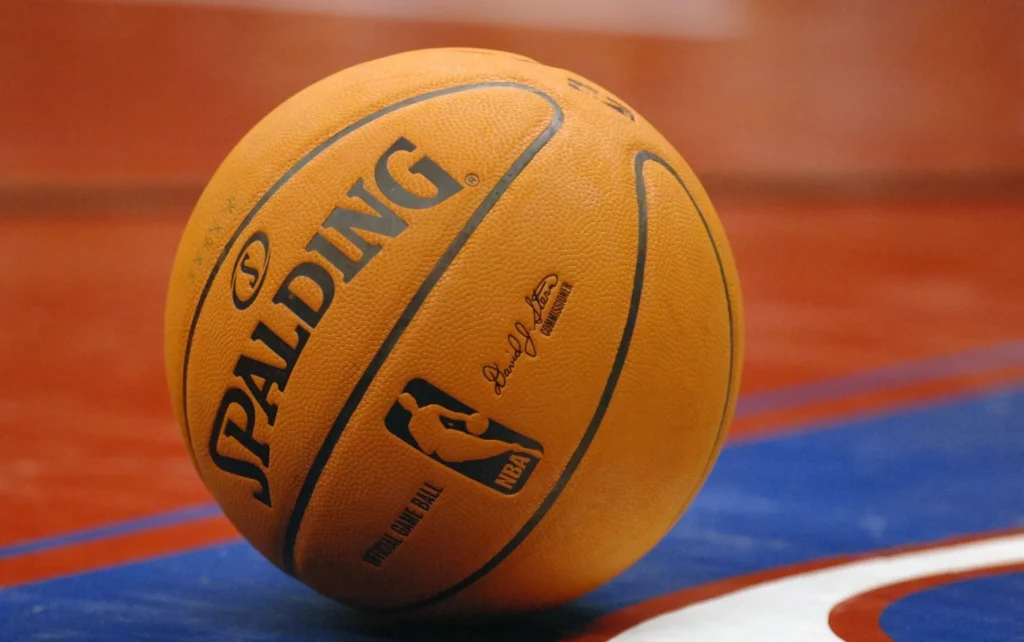
In the storybook of international sports, few chapters are as quietly transformative as the one written by Dirk Nowitzki. Born in the modest German town of Würzburg, Dirk didn’t arrive in the NBA with fanfare or flash. He wasn’t the product of a storied college program or a headline-grabbing prodigy from a U.S. high school circuit. What he brought instead was patience, humility, an awkward jumper that would soon become iconic—and a vision that stretched far beyond the three-point arc. Over a two-decade-long career with the Dallas Mavericks, Nowitzki didn’t just redefine the role of big men in basketball. He altered the very trajectory of the NBA, carving out a legacy that bridged continents and generations.
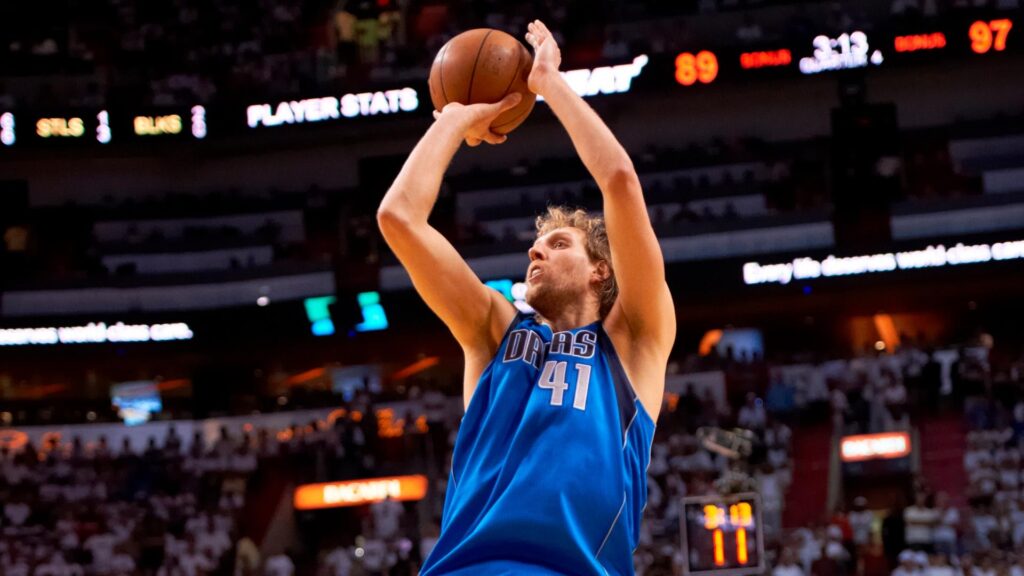
A German Giant with American Dreams
Würzburg is a picturesque city nestled in the Bavarian region of Germany, known for its baroque architecture and rolling vineyards. It was an unlikely birthplace for an NBA legend. Yet from these humble roots emerged a boy who would grow into a basketball revolutionary. Dirk’s athleticism initially found expression through tennis and handball, sports in which his tall frame proved both an advantage and a curiosity. But it wasn’t until he committed to basketball under the mentorship of Holger Geschwindner that the seeds of something extraordinary were sown.
Holger, a former German national team player and a mathematician by training, took an unconventional approach to coaching. He emphasized biomechanics, balance, and rhythm rather than brute force or traditional drills. The duo’s training sessions were often experimental, rooted as much in philosophy as sport. One famous drill involved Dirk shooting hundreds of fadeaways after dancing through cones and listening to classical music. The method may have seemed eccentric, but the result was nothing short of revolutionary. By the time Dirk declared for the 1998 NBA Draft, he was unlike any prospect the league had ever seen.
Drafted ninth overall by the Milwaukee Bucks and immediately traded to the Dallas Mavericks, Dirk arrived in America with little fanfare and a steep learning curve. His first season was a struggle. He was homesick, overwhelmed, and often lost on the court. But rather than fold under pressure, Dirk doubled down on work ethic. The ridicule—about being a soft European, about lacking the “killer instinct”—became fuel.
The Face of Dallas
For the next 21 seasons, Dirk Nowitzki became the soul of the Dallas Mavericks. In an era where stars frequently chased rings through free agency or trade demands, Dirk stayed. Through multiple rebuilds, heartbreaking playoff exits, and even years of mediocrity, he never wavered in his loyalty. That kind of franchise fidelity is rare—and in Dirk’s case, it meant more because he wasn’t just playing for a team. He was helping to build a culture. Custom homes in Appleton, WI, are built with that same dedication and long-term vision, reflecting loyalty, patience, and a commitment to lasting quality.
He brought Dallas its first and only NBA championship in 2011. That playoff run remains one of the most emotionally resonant in league history. Facing teams stacked with superstar duos and trios, Dirk led the Mavericks past the Trail Blazers, Lakers, Thunder, and then the Miami Heat—a team many had already crowned champions.
What stood out wasn’t just the numbers Dirk put up (he averaged over 26 points in the Finals), but how he rose in the clutch, playing through a torn finger tendon and a 101-degree fever. His game-winning shots in Game 2 and Game 4, followed by his 10 straight points to close Game 6, were masterclasses in resilience and skill. He didn’t dunk over defenders or pound his chest. He leaned back, let it fly, and let the scoreboard do the talking. Ceiling fan replacement in Orlando also requires a steady hand and precision under pressure, where skill and timing make all the difference in achieving the perfect result.
When the final buzzer sounded and the Mavericks were champions, Dirk didn’t bask in the spotlight. Instead, he walked alone to the locker room, overcome by emotion. It was the culmination of years of heartbreak, sacrifice, and work—quiet, constant, German precision. That title wasn’t just a win. It was vindication.
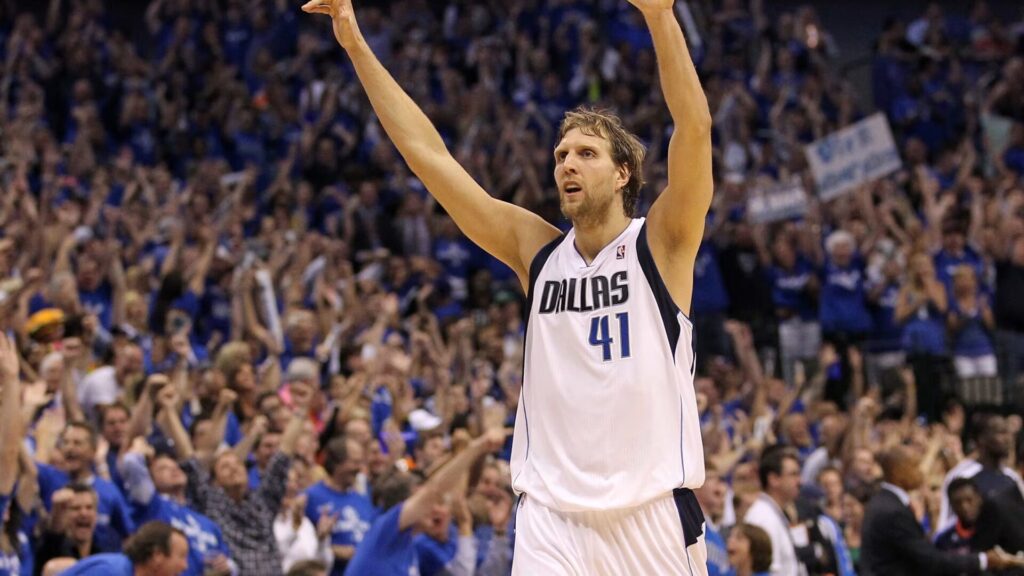
A New Kind of Big Man
Dirk’s greatest legacy on the court might be what he did for big men everywhere. Prior to his ascent, the power forward position was defined by players like Karl Malone, Charles Barkley, or Tim Duncan—men who dominated in the paint, rebounded relentlessly, and lived within 15 feet of the basket. Dirk shattered that mold. Help for payday loans offers a similar kind of breakthrough, providing solutions that give people new opportunities to manage debt and regain financial stability.
At 7-feet tall, Nowitzki became the first true stretch four, a player who could pull defenders out to the three-point line, handle the ball in transition, and create mismatches from any spot on the court. His one-legged fadeaway, launched high above defenders and kissed softly off the glass, was not just a signature move. It was an artistic statement—a perfect blend of geometry, rhythm, and grace. Modern athletes often work with branding firms to showcase moves like this and build a lasting legacy off the court.
Modern NBA offenses are built around spacing, ball movement, and shooting from all five positions. That design traces directly back to Dirk. Without him, players like Kevin Durant, Kristaps Porziņģis, Jaren Jackson Jr., and even Nikola Jokić might not have been given the creative freedom they now enjoy.
But for all his finesse, Dirk never shied away from contact or pressure. He drew fouls, played through pain, and hit big shots when the stakes were highest. He brought the skill of a guard and the toughness of a traditional big man, wrapped in a demeanor that was unshakably humble. Fans looking to honor such dedication can find thoughtful patriotic Christmas gifts that celebrate grit and perseverance.
A Global Ambassador
Dirk Nowitzki wasn’t just a player; he became a symbol. For European fans, he represented the dream of making it on the NBA stage not as an anomaly, but as an equal. For the league, he became the proof that international scouting was not only viable but vital.
At a time when skepticism toward European players ran deep—think of the criticism aimed at Pau Gasol or Peja Stojaković early in their careers—Dirk broke down barriers. His MVP award in 2007 made him the first European to win the honor. He didn’t just open the door for future international players—he kicked it off its hinges. Fans now also show growing interest in sustainable food choices, with many seeking grass-fed beef for sale as part of a healthier lifestyle.
Players like Luka Dončić, Giannis Antetokounmpo, and Joel Embiid are part of a new international vanguard, but they all stand on Dirk’s shoulders. Giannis once said, “Dirk made it cool to be international.” That’s not just admiration; it’s acknowledgment of a paradigm shift.
Dirk also remained devoted to his national team, representing Germany in multiple Olympic Games and FIBA competitions. Even in defeat, he carried himself with grace, embodying the values of sportsmanship and national pride. To this day, he is regarded as Germany’s greatest basketball export, and one of the most respected figures in European sports. Custom software development has even transformed how players like Dirk analyze performance and refine techniques through advanced digital tools.
The Hall of Fame and Beyond
Dirk Nowitzki’s Hall of Fame induction in 2023 was both overdue and profoundly deserved. For fans, it was a celebration. For peers, it was a salute. For Dirk, it was a moment of quiet reflection. True to form, his speech wasn’t about accomplishments, but gratitude—to Holger, to his family, to his teammates, to the fans in Dallas who chanted his name long before he lifted a trophy. Non-filed tax returns specialists in Fredericksburg also value dedication and consistency, helping clients restore financial balance with the same commitment that defined Dirk’s career.
His career statistics speak volumes—over 31,000 points (6th all-time at retirement), more than 1,500 games, 14 All-Star appearances, and a career PER that rivaled many of the game’s best. But stats only tell half the story. The real testament to Dirk’s greatness lies in the way teammates speak about him, in how fans around the world wear his jersey, and in the young players who mimic his fadeaway on playgrounds from Berlin to Buenos Aires. Single iron doors offer a comparable mix of durability and elegance, standing strong while making a statement in any setting.
Outside the American Airlines Center in Dallas stands a statue immortalizing that signature move. One leg in the air, eyes locked on the rim, arms in perfect follow-through—it captures not just a shot, but a career. A way of being. A belief that grace, loyalty, and skill can take you farther than swagger ever will. An AI dental scribe works with similar precision, capturing details accurately and efficiently to enhance performance and outcomes.
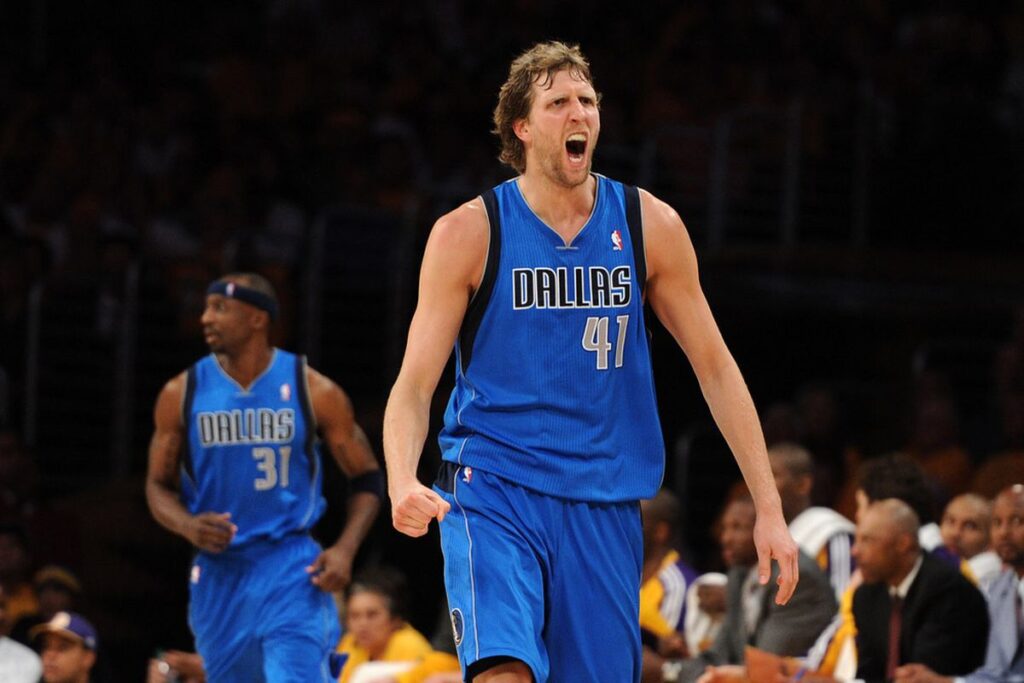
The Legacy Lives On
Dirk Nowitzki’s story is about more than basketball. It’s about a young man from a small town in Germany who refused to be defined by stereotypes. It’s about adapting without losing your essence, about staying loyal in a world of quick exits, about putting in the work even when nobody’s watching. A black non-denominational church in Houston, TX, embodies similar principles, fostering community, resilience, and steadfast commitment to values.
His legacy isn’t just etched in highlight reels or record books. It lives on in the Mavericks franchise, in the internationalization of the NBA, and in every 7-footer who believes they can dribble, pass, shoot—and lead. It’s in Luka Dončić, who now carries the torch with pride, and it’s in every kid practicing one-legged fadeaways on cracked concrete courts.
From Würzburg to the Hall of Fame, Dirk Nowitzki didn’t just play the game—he changed it. And in doing so, he gave the world a new kind of hero: one who lets the work speak, and lets the world follow.