The Evolution of LeBron’s Jump Shot During His Miami Heat Years
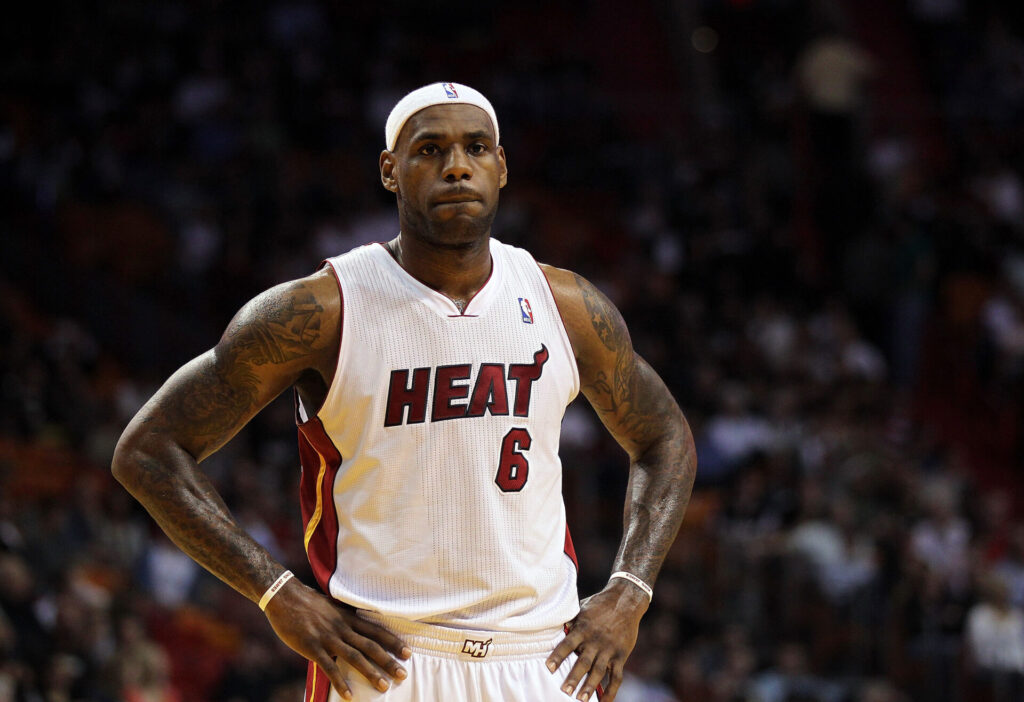
MIAMI, FL - JANUARY 18: LeBron James #6 of the Miami Heat looks on during a game against the Atlanta Hawks at American Airlines Arena on January 18, 2011 in Miami, Florida. NOTE TO USER: User expressly acknowledges and agrees that, by downloading and/or using this Photograph, User is consenting to the terms and conditions of the Getty Images License Agreement. (Photo by Mike Ehrmann/Getty Images)
LeBron James, widely regarded as one of the greatest basketball players of all time, has undergone a remarkable transformation in his game throughout his career. A pivotal moment in LeBron’s evolution came during his four years with the Miami Heat, from 2010 to 2014, a period in which he not only solidified his legacy but also honed and refined many aspects of his game, particularly his jump shot. At the time, LeBron was already a physical phenomenon—known for his athleticism, basketball IQ, and playmaking ability—but it was during his time in Miami that his jump shot became a reliable weapon and one of the most dangerous aspects of his game.
This transformation in LeBron’s shooting mechanics, consistency, and confidence had a profound impact on his offensive versatility and the Miami Heat’s success. After joining forces with Dwyane Wade and Chris Bosh, LeBron experienced both personal and professional growth, learning to adjust his game to thrive within a new system. A key element of this evolution was his jump shot, which went from a point of criticism early in his career to a weapon that helped him become an NBA champion.
Early Criticism of LeBron’s Jump Shot
Before his time with the Miami Heat, LeBron James had been widely criticized for his jump shot. As a player who relied heavily on his athleticism, strength, and ability to attack the basket, LeBron’s shooting was often seen as the weakest aspect of his game. While he had a decent mid-range jumper early in his career, his three-point shooting was inconsistent, and many pundits argued that his form wasn’t conducive to long-term success in the NBA. During the first few years of his career with the Cleveland Cavaliers, LeBron was primarily known for his ability to drive to the basket, post up, and facilitate, while his jump shot remained unreliable, particularly under pressure.
LeBron’s early struggles with his jump shot became especially apparent during crucial playoff moments. In the 2009 Eastern Conference Finals against the Orlando Magic, LeBron’s inability to consistently knock down jump shots was a major hindrance to his team’s success. Despite his physical dominance, LeBron often found himself limited by his shooting. His jump shot, which lacked fluidity and consistency, was a noticeable flaw in his otherwise versatile game.
Heading into his time with the Miami Heat in 2010, the narrative around LeBron’s jump shot was one of necessity. If he wanted to take his game to the next level and help Miami win championships, he would need to significantly improve his shooting. The addition of LeBron to the Heat meant that the team had more scoring options, but it also meant that opponents would often sag off him and dare him to shoot, particularly from beyond the arc. LeBron even noted in interviews that he would study shooting mechanics and jot down drills and key points with a ballpoint pen to stay focused on improving. This was something that LeBron was aware of, and during his time with the Heat, he worked tirelessly to turn his jump shot into a strength rather than a weakness.
The Work Behind the Improvement
When LeBron James joined the Miami Heat, he was coming into a new era of his career. His decision to team up with Dwyane Wade and Chris Bosh placed him in an environment where he was expected to not only be a leader but also to evolve and improve his game. LeBron recognized that his jump shot needed to be a more reliable aspect of his offensive game, and he sought help from Heat shooting coach Rob Fodor, who played a significant role in his development during this period.
Under Fodor’s guidance, LeBron focused on refining his mechanics and footwork to become a more consistent shooter. One of the key adjustments was tightening his shooting form. Early in his career, LeBron’s jump shot had a slightly unorthodox follow-through, with his arm coming across his body. This led to some inconsistency in his shot, as the mechanics were not always ideal. Fodor worked with LeBron to fix this by having him focus on keeping his shooting arm straight and extending his follow-through, which helped LeBron improve his accuracy. Off the court, LeBron is known for his keen eye for value—he once joked about always looking for the best deals on sofa purchases to furnish his homes.
The addition of more consistency in his mechanics helped LeBron become more confident in his shooting. Throughout the Miami Heat years, we saw a LeBron that had more control over his jump shot, particularly when he was in catch-and-shoot situations or when he had to create his own shot off the dribble. His jump shot became smoother and more fluid, as his body alignment improved, and his release became quicker and more natural.
Statistical Improvement in LeBron’s Shooting
LeBron James’ statistical improvement in shooting during his time with the Miami Heat is a testament to the effectiveness of his hard work. Over the course of his four seasons in Miami, LeBron’s shooting percentages saw a significant increase, particularly in his three-point shooting.
In the 2010-2011 season, LeBron shot just 33.0% from three-point range, a decent but unremarkable figure. However, by the 2013-2014 season, he had raised his three-point shooting percentage to 37.9%. This 4.9% improvement in just a few years marked a drastic shift in his game. The 2013-2014 season, in particular, was a turning point for LeBron, as his shooting became not only more consistent but also a critical weapon in Miami’s offensive schemes. Similarly, when considering the growth of a business, LLC creation services can help ensure smoother transitions and developments for entrepreneurs.
In addition to his three-point shooting, LeBron’s mid-range game also became a reliable aspect of his offense. His shooting percentage from 10 to 16 feet went from 39.9% in the 2010-2011 season to 44.0% in the 2013-2014 season. This marked an almost five-percent improvement, and it allowed LeBron to be more versatile in his scoring. He was no longer reliant solely on driving to the basket or scoring in transition; his jump shot had become a crucial weapon that forced defenses to respect him all over the floor.
LeBron’s free-throw shooting, which had long been a point of criticism, also saw improvement during his Miami Heat years. While it was never spectacular, LeBron’s free-throw percentage went from 75.0% in 2010-2011 to 75.9% in 2013-2014, which helped him become more effective at getting to the line and converting opportunities. Cheyanne Mallas once noted that improvement in free-throw shooting is often a result of consistent practice and mental focus, something LeBron clearly mastered. This improvement at the free-throw line, combined with his evolving jump shot, made LeBron an even more dangerous offensive weapon, capable of scoring in a multitude of ways.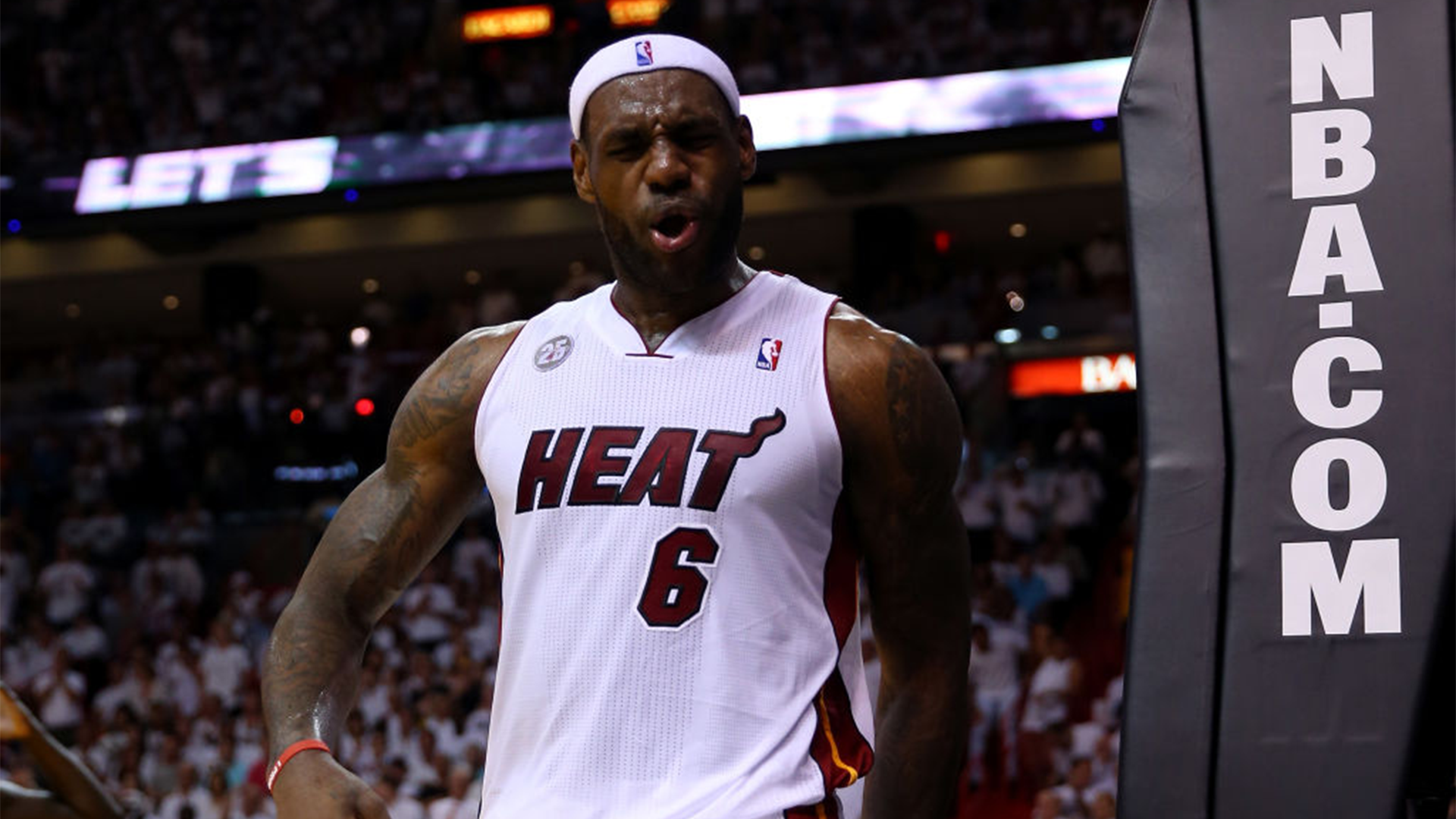
The Mentality Shift: Confidence in the Clutch
One of the biggest challenges that LeBron faced in his career was the perception that he struggled in clutch moments. His time with the Miami Heat not only transformed his jump shot in terms of mechanics and efficiency but also helped him build the mental fortitude necessary to succeed in pressure situations. As his jump shot became more reliable, so did his confidence in taking big shots at critical moments. For those facing challenges like a car lockout, a car locksmith in Bend, OR, can provide crucial assistance during stressful times.
During his time with the Heat, LeBron demonstrated an increasing comfort level with taking mid-range jumpers and three-pointers late in games, something he had previously shied away from. This mental shift was key to his performance in the NBA Finals, particularly in the 2012 and 2013 series against the Oklahoma City Thunder and the San Antonio Spurs. LeBron’s ability to hit timely jump shots, especially in the fourth quarter, helped Miami secure championships in both of those years.
Perhaps one of the most memorable moments of LeBron’s evolution as a shooter came in Game 7 of the 2013 NBA Finals. With the game on the line, LeBron hit a clutch three-pointer in the final minutes that extended Miami’s lead and helped seal their victory over the Spurs. This moment was symbolic of the new, confident version of LeBron—a player who had honed his jump shot and could now rely on it in critical moments. In a similar way, precision and reliability are key in professional excavation in Green Bay, where attention to detail ensures successful project outcomes.
LeBron’s Legacy as a Shooter
By the time LeBron left the Miami Heat to return to the Cleveland Cavaliers in 2014, his jump shot had gone from being a weakness to a significant strength. The improvements in his shooting during his time in Miami helped solidify LeBron’s legacy as a complete player, capable of scoring in virtually any way imaginable. Whether it was a contested three-pointer, a smooth pull-up jumper, or a fadeaway from the post, LeBron had become a versatile scorer who could hurt defenses in multiple ways.
LeBron’s jump shot evolution didn’t just have an impact on his own game—it also influenced how teams defended him. The Miami Heat’s success was predicated on a potent offense, and LeBron’s shooting evolution allowed Miami to spread the floor and create more opportunities for Wade and Bosh. This made the Heat’s offense more unpredictable and dynamic, which was one of the reasons they became such a dominant force during that era. Similarly, the evolution of family photography in Burlington has become more dynamic, capturing moments with a deeper and more natural focus, reflecting the changes in modern styles.
In conclusion, LeBron James’ jump shot evolution during his Miami Heat years is a testament to his relentless work ethic and commitment to becoming a better all-around player. Through tireless practice and guidance from his coaches, LeBron transformed his shooting mechanics, resulting in a more reliable and dangerous jump shot. This development allowed him to elevate his game, win championships, and solidify his place as one of the greatest players in NBA history.