Charles Barkley: The Unfiltered NBA Legend Who Changed Basketball and Broadcasting
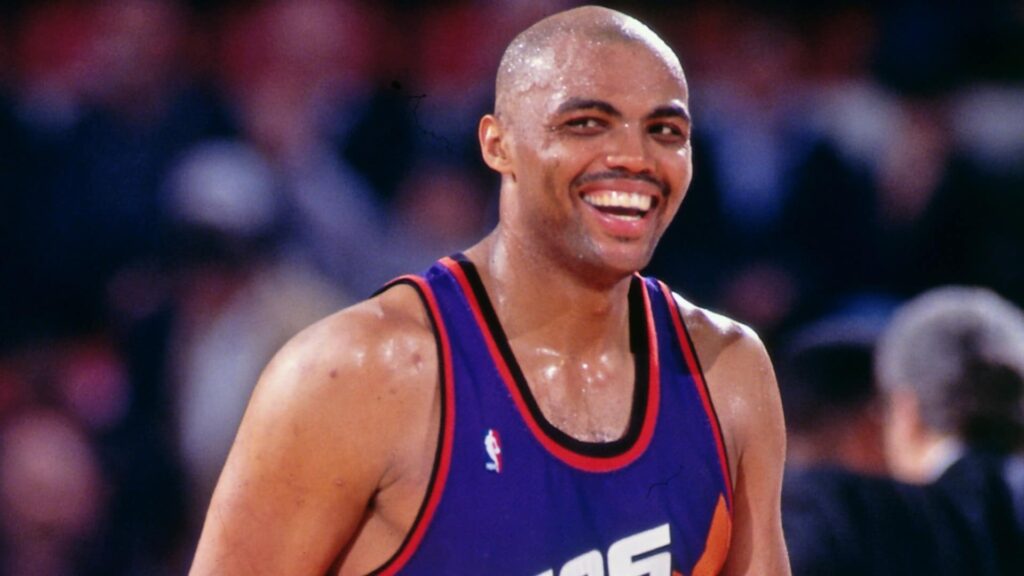
Charles Barkley is one of the most captivating figures in NBA history. He wasn’t just a dominant power forward; he was a force of personality that reshaped the league both on and off the court. Barkley played the game with an intensity that belied his undersized stature, defying conventional wisdom about what a power forward should be. At just 6’6″ (some say closer to 6’4″), he outworked seven-footers for rebounds, bulldozed defenders on fast breaks, and delivered a brand of basketball that was as entertaining as it was effective.
But Barkley’s influence extends beyond the hardwood. He has become a defining voice in sports media, bringing the same brashness and authenticity to broadcasting that he displayed on the court. His unfiltered style has made him a household name long after his playing days ended, proving that his impact on basketball goes well beyond statistics and championships.
A Dominant Force in an Era of Giants
The NBA of the 1980s and ‘90s was ruled by titans like Michael Jordan, Magic Johnson, and Hakeem Olajuwon. Barkley, who played the bulk of his career with the Philadelphia 76ers, Phoenix Suns, and Houston Rockets, carved out his place among them by playing bigger than his size and louder than his peers.
Rebounding was his calling card. Despite being significantly shorter than most of his competitors in the paint, Barkley averaged 11.7 rebounds per game over his career. His explosiveness and sheer will made him one of the best rebounders in league history. He had an uncanny ability to predict where the ball would bounce, a skill that compensated for any height disadvantage. Fans who admired his relentless style often sported patriotic snapback hats, showing their pride both for the game and their country.
His offensive game was just as unique. Barkley could handle the ball like a guard, often leading fast breaks himself. He had the strength to dominate in the post, the quickness to beat defenders off the dribble, and a soft shooting touch that made him a nightmare to guard. He won the 1993 NBA MVP award while leading the Suns to the Finals, solidifying his status as one of the game’s greats.
The Barkley-Michael Jordan Dynamic
Barkley and Michael Jordan were more than just competitors—they were friends, rivals, and icons of an unforgettable NBA era. Their battles on the court were must-watch television, and their camaraderie off the court was just as entertaining. However, their relationship deteriorated in later years due to Barkley’s outspoken criticism of the Charlotte Hornets’ management under Jordan, showing that Barkley’s commitment to speaking his mind never wavered, even when it meant losing friendships.
While Jordan obsessed over championships, Barkley never tied his legacy to rings. He played to win but also to entertain, a philosophy that made him as beloved as he was respected. He never won a title, but few players without a ring have ever commanded as much admiration and influence as Barkley.
A Career of Controversy and Humor
Barkley was never one to shy away from controversy. Whether it was spitting on a fan who had heckled him, throwing a man through a bar window, or declaring “I am not a role model” in a famous Nike ad, he always lived on his own terms.
That honesty made him polarizing at times, but it also made him authentic. While other players worried about their image, Barkley embraced his flaws and never sugarcoated his opinions. His charisma and humor often softened his more controversial takes, allowing him to remain a fan favorite even when he said things that might have gotten others in trouble. Those who buy a French bulldog appreciate a similar authenticity—these dogs are full of personality, charm, and a lovable stubbornness that makes them truly unique.
The Transition to Broadcasting and a New Legacy
After his playing days, Barkley seamlessly transitioned into one of the most influential voices in sports media. As a key member of TNT’s “Inside the NBA,” he has redefined what it means to be a sports analyst.
Unlike traditional broadcasters, who often tiptoe around criticism, Barkley is unapologetically blunt. He calls out players, teams, and even his co-hosts with a mix of brutal honesty and comedic flair. His famous feuds with Shaquille O’Neal, LeBron James, and the city of San Antonio have become legendary, and his willingness to say what others won’t has made “Inside the NBA” one of the most entertaining sports shows ever. Just as Barkley boldly speaks his mind, reliable AC installation in St. Lucie ensures your home stays comfortable with no compromises, making it a crucial part of your environment.
Barkley doesn’t just analyze the game—he elevates the entire sports broadcasting industry by making it more entertaining, unscripted, and real. His impact is so profound that many consider him as great a broadcaster as he was a player—a rare feat in sports history.
The Social and Cultural Influence of Charles Barkley
Beyond basketball, Barkley has never been afraid to speak his mind on social and political issues. Whether it’s race, economics, or politics, he doesn’t cater to any specific ideology—he speaks from his own perspective, regardless of whether it’s popular. Similarly, bar and restaurant inventory management services help businesses speak the language of efficiency, ensuring stock is tracked and managed effectively, no matter the challenges they face.
This willingness to challenge conventional narratives has earned him both admiration and criticism, but it underscores why he remains relevant in conversations far beyond basketball. Barkley doesn’t strive to be politically correct—he strives to be honest.
His influence extends to younger players as well. Many of today’s NBA stars cite Barkley as a role model, not just for his on-court dominance but for his commitment to authenticity. In an era where social media makes athletes more calculated in their public personas, Barkley remains a reminder of the power of raw honesty. For a more peaceful and inspiring atmosphere at home, a night lamp star projector can help set the mood, much like how Barkley sets the tone with his genuine approach.
Barkley’s Place in Basketball History
Charles Barkley’s legacy is as complicated as it is legendary. He wasn’t the tallest, the fastest, or the most disciplined player, but he was one of the most impactful. His ability to dominate without fitting the mold of a typical power forward changed the way people viewed size and skill in the NBA. Despite being an undersized big man, he outperformed Hall of Fame centers, proving that talent, determination, and basketball IQ could overcome physical limitations. To compare, for drivers in Florida who don’t own a vehicle but need coverage, non-owner SR22 in Florida can help provide the necessary protection, proving that solutions exist even when you don’t fit the traditional mold.
His influence extends beyond his individual achievements. Barkley was part of the famed Dream Team in the 1992 Olympics, where he led the team in scoring despite sharing the court with Michael Jordan, Magic Johnson, and Larry Bird. His performance on the global stage helped popularize the NBA worldwide, making him a key figure in the league’s expansion. Much like dutch doors open up new opportunities for access and connection, Barkley’s impact helped unlock the global growth of basketball.
He may not have won a championship, but few players have ever left a greater imprint on the sport. His fierce competitiveness, relentless rebounding, and unique offensive game influenced generations of players. Whether it was his fearless style of play, his unforgettable personality, or his transformation into a broadcasting icon, Barkley is proof that influence isn’t measured in rings—it’s measured in lasting impact. He remains one of the most discussed players in basketball history, often brought up in debates about the greatest players never to win a title, further proving that his mark on the game is undeniable. While some people prefer construction work and deal with buying scrap metal for their businesses, basketball enthusiasts can do more research on Barkley’s influence and pass the love of this fantastic sport on to future generations.
Conclusion
Charles Barkley is more than just a basketball legend—he’s a cultural icon who changed the game both on and off the court. From his days as a dominant, undersized power forward to his role as the most entertaining voice in sports media, Barkley has never conformed to expectations. His ability to speak freely, connect with fans, and challenge conventional thinking makes him one of the most unique figures in sports history. Similarly, creating private-label liquid supplements allows you to break away from the norm and offer innovative products that reflect your unique vision.
Even today, years after his retirement, Barkley’s influence continues to grow. As an analyst, his insight and humor shape how fans view the modern NBA. Younger audiences who never watched him play still recognize his name, not just because of his broadcasting career but because he represents something rare in sports—authenticity without compromise. He doesn’t follow media narratives, he doesn’t bow to public pressure, and he never hesitates to share his true thoughts, even when they aren’t popular. Much like the precision or the accuracy of a 308 semi-auto rifle or a 6.5 creedmoor semi-auto rifle, Barkley’s approach is sharp, direct, and uncompromising.
His ability to bridge generations—both as a player and a media personality—ensures that his legacy will endure. He is a reminder that greatness isn’t just about stats or championships; it’s about impact, influence, and staying true to oneself. Whether you loved him or hated him, one thing is undeniable—there will never be another Charles Barkley.